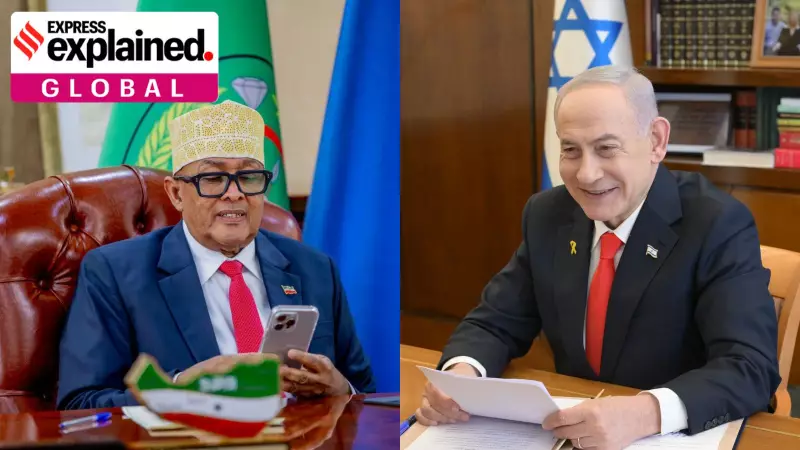
In a historic and controversial diplomatic move, Israel has become the very first country to formally recognize the self-declared Republic of Somaliland as an independent and sovereign state. The declaration, made on Friday, December 26, 2025, has drawn immediate condemnation from Somalia, which considers Somaliland part of its territory, and raised eyebrows across the international community.
A Breakaway State's Long Quest for Recognition
The roots of Somaliland's claim to statehood stretch back over a century. The region was formerly the British Somaliland Protectorate, established in 1884. It briefly existed as the independent State of Somaliland for five days in June 1960 before voluntarily merging with the neighboring Italian-administered territory to form the Somali Republic.
Decades later, following a brutal civil war and the oppressive regime of General Siad Barre, Somaliland declared its independence in 1991. Barre's forces are accused of killing between 50,000 to 200,000 civilians, primarily from the Isaaq clan, and displacing over 300,000 people during a 1988 crackdown on rebels.

Since then, Somaliland has functioned as a de facto state with a population of nearly six million. It boasts its own currency, passports, police force, and democratic government. Despite this stability, no United Nations member state had granted it official recognition—until Israel's groundbreaking decision.
Why Israel Took the Diplomatic Plunge
Israeli Prime Minister Benjamin Netanyahu framed the recognition as an extension of the spirit of the Abraham Accords, the U.S.-brokered normalization agreements with several Arab nations. He congratulated Somaliland's President, Dr. Abdirahman Mohamed Abdallah, and invited him to visit Israel.
However, the motivations extend far beyond diplomatic camaraderie. Analysts point to a confluence of strategic and geopolitical interests driving Israel's move.
First is the critical location. Somaliland sits on the southern coast of the Gulf of Aden, a chokepoint for global shipping. Its Berbera Port is a strategic asset at the confluence of the Red Sea and the Arabian Sea. The United Arab Emirates (UAE), a signatory to the Abraham Accords, already operates a military base there. This positioning offers Israel potential intelligence and logistical advantages, particularly for monitoring Houthi militants in nearby Yemen.
Second is the China factor. China has a significant military and economic footprint in Africa, including a base in Djibouti, which borders Somaliland. Somaliland is one of the few entities that recognizes Taiwan, putting it at odds with Beijing's One-China policy. Israel's recognition could be seen as a move to counterbalance Chinese influence in the Horn of Africa, a goal that aligns with broader U.S. strategic interests.
A third, more contentious theory involves the potential for resettling Palestinians. While both Somali and Somaliland authorities have denied discussing such a proposal, the idea persists in geopolitical analysis, especially as Israel continues its occupation of Palestinian territories.
Regional Fallout and Global Implications
The recognition has ignited a firestorm of protest from the Federal Government of Somalia in Mogadishu, which views the act as a violation of its sovereignty. Neighboring African nations, many of which are wary of setting a precedent for secessionist movements, have also expressed disapproval.
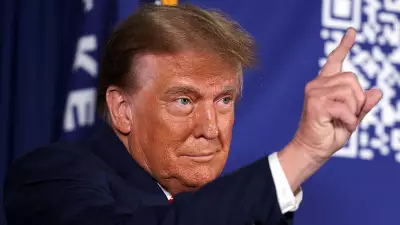
Interestingly, the move has not garnered support from the United States. Former President Donald Trump, whose administration spearheaded the Abraham Accords, publicly questioned the wisdom of recognizing Somaliland, asking, "Does anyone know what Somaliland is, really?"
Israel's unilateral recognition places Somaliland in a unique and precarious position. It gains a powerful, though controversial, international ally but risks further alienating its neighbors and complicating its long-term quest for broader global acceptance. The decision underscores how regional conflicts, from the Red Sea to the South China Sea, are increasingly intersecting on the African continent, drawing in global powers and reshaping alliances.