

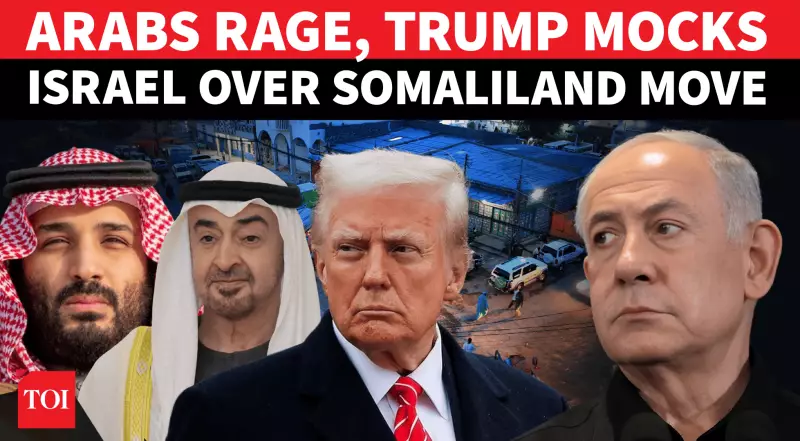
In a move that has sent shockwaves through international diplomacy, Israel has become the first nation globally to grant official recognition to Somaliland as a sovereign country. Prime Minister Benjamin Netanyahu formalized this decision in a live phone call with Somaliland's president on December 27, 2025, hailing the moment as "historic" and expressing intentions to integrate Somaliland into the Abraham Accords framework.
Washington's Cold Shoulder and Regional Fury
The bold diplomatic step, however, has been met with immediate and significant resistance. In a surprising development, United States President Donald Trump has refused to endorse Israel's unilateral recognition. This lack of American support has amplified a growing chorus of international condemnation. The government of Somalia, which considers Somaliland part of its territory, has denounced the recognition as a direct assault on its sovereignty.
The backlash extends far beyond Somalia's borders. Key regional and global powers have united in their criticism. The African Union, Egypt, Saudi Arabia, Turkey, and Djibouti have all issued strong statements condemning Israel's decision. These nations warn that the move threatens to destabilize the volatile Horn of Africa region and could have ripple effects across the wider Middle East, potentially undermining existing peace and security architectures.

Geopolitical Ramifications and Netanyahu's Gamble
Prime Minister Netanyahu's live signing ceremony was a calculated public relations event, aiming to showcase Israel's expanding diplomatic reach. His promise to connect the breakaway region to the Abraham Accords suggests a strategy to create new alliances in the Red Sea area. However, this gambit appears to have backfired on the global stage, leading to Israel's unprecedented isolation on this issue.
The condemnation from Saudi Arabia, led by Crown Prince Mohammed bin Salman (MBS), is particularly noteworthy, indicating a firm Arab stance against the move. The unified response from African nations, spearheaded by the African Union and neighbors like Djibouti, highlights the serious concerns about border integrity and regional stability. The situation presents a complex diplomatic challenge, pitting Israel's quest for new partners against established international norms regarding territorial sovereignty.
Looking Ahead: A Diplomatic Quagmire
The fallout from Israel's recognition of Somaliland is still unfolding. The strong, coordinated international backlash suggests a difficult path ahead for this new bilateral relationship. With the United States stepping back and powerful regional players voicing fierce opposition, the long-term viability of this diplomatic recognition is now in question. The event marks a significant test for Netanyahu's foreign policy and underscores the delicate balance of power in one of the world's most strategically important regions.






