

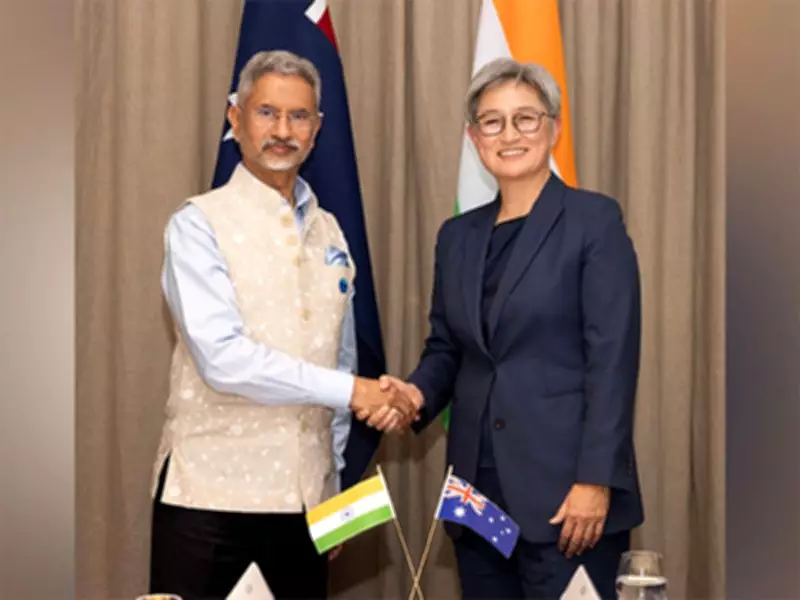
Jaishankar and Australian Counterpart Penny Wong Hold Strategic Dialogue on West Asia Crisis
External Affairs Minister S Jaishankar engaged in a high-level telephonic conversation with Australian Foreign Minister Penny Wong on Friday, March 20, 2026. The discussion centered on the escalating security situation in West Asia and broader strategic developments in the Indo-Pacific region.
Focus on Regional Assessments and Bilateral Engagement
In a post on social media platform X, Jaishankar expressed his satisfaction with the bilateral engagement, stating he was "very pleased to speak with my Australian counterpart @SenatorWong." The ministers shared their assessments of the ongoing West Asia conflict, which has now entered its 21st day since hostilities erupted on February 28, 2026.
This dialogue underscores India's proactive diplomatic efforts to navigate the economic and security implications of the prolonged confrontation. Beyond the immediate crisis in the Gulf, the ministers also addressed maritime and security challenges in the Indo-Pacific, with Jaishankar noting they "also discussed Indo-Pacific issues."

Context of Escalating Hostilities and Global Impact
The conflict began on February 28 with joint military strikes by the United States and Israel that resulted in the death of Iran's 86-year-old Supreme Leader, Ayatollah Ali Khamenei. Following his demise, Mojtaba Khamenei, his son, was appointed as the new Supreme Leader of the Islamic Republic.
In retaliation, Iran targeted Israeli and U.S. assets across several Gulf countries and Israel, leading to significant disruptions. Iran has effectively closed the Strait of Hormuz, a critical transit route for global energy supply, severely affecting international energy markets and threatening global economic stability.
Previous Diplomatic Exchanges and Strategic Partnerships
This conversation follows a telephonic discussion on Thursday between Jaishankar and Israeli Foreign Minister Gidon Saar. Saar emphasized Israel's appreciation for its "special strategic partnership" with India and briefed Jaishankar on Israel's operations against what he described as the "Iranian terror regime."
Saar highlighted Tehran's acts of "naval terrorism" in the Strait of Hormuz, stating that the regime's aggression extends to other regions, including the Middle East, Caucasus, and Europe. He warned that this issue is not confined to the U.S. or Israel but poses a fundamental problem for world order and the global economy, potentially spreading worldwide if not addressed promptly.
Jaishankar acknowledged the exchange, posting on X, "Had a telecon with FM Gidon Saar of Israel this evening. Exchanged views on the ongoing West Asia conflict and its many repercussions."
Implications for Global Diplomacy and Security
The ongoing conflict has prompted India to intensify its diplomatic outreach with key global partners like Australia and Israel. These discussions reflect a concerted effort to manage the multifaceted challenges arising from the West Asia crisis, including:
- Security threats in the Gulf region and their spillover effects.
- Economic disruptions due to the closure of vital maritime routes like the Strait of Hormuz.
- Strategic cooperation in the Indo-Pacific to ensure regional stability.
As hostilities continue, such high-level dialogues are crucial for shaping international responses and mitigating the broader impacts on global security and trade.






