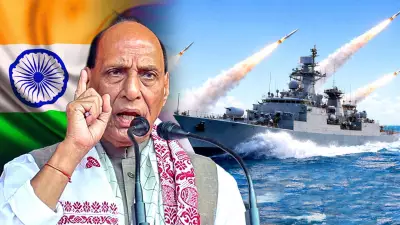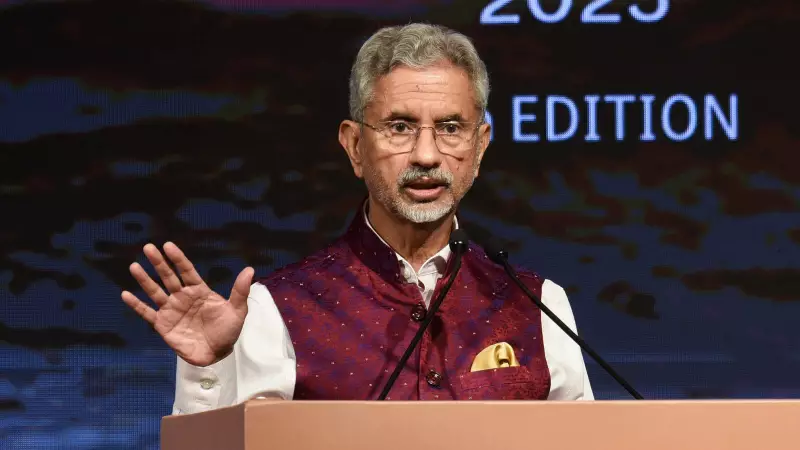
External Affairs Minister Dr. S. Jaishankar on Saturday pinpointed the powerful military establishment in Pakistan as the primary source of India's enduring challenges with its neighbour. Speaking at the Hindustan Times Leadership Summit, the minister argued that a significant portion of the hostility and terrorism directed at India originates from the Pakistani Army's ideology and policies.
Pakistani Army: The Epicentre of Hostility
Jaishankar stated that the reality of the Pakistani Army has always been central to the bilateral friction. He elaborated that when examining cross-border terrorism, the existence of training camps, and a deep-seated ideological hostility, the trail consistently leads back to the military leadership in Islamabad. "Much of our problems actually emanate from them," he was quoted as saying by the PTI news agency.
The minister urged India to resist viewing itself through a "hyphenated" lens with Pakistan, emphasizing the stark contrasts between the two nations. He pointed to the vast differentials in capabilities, the quality of governance, and their respective global reputations as reasons to avoid such comparisons. "We should not get over obsessed and hyphenate ourselves with them," Jaishankar advised, while acknowledging that specific challenges and issues would continue to be dealt with firmly.

Asserting Strategic Autonomy in Global Diplomacy
Addressing questions on India's multifaceted foreign policy, Jaishankar robustly defended the nation's right to engage independently with all major powers. When asked if Russian President Vladimir Putin's recent visit could complicate trade talks with the United States, he dismissed the premise.
"Everybody knows that India has relations with all the major countries in the world," he said, adding that expecting a veto on India's external engagements was an unreasonable proposition. He underscored that India's diplomatic choices are firmly rooted in "freedom of choice" and "strategic autonomy." This principle, he noted, is well-understood by international partners.
Defending National Interest in Trade and Border Affairs
On the subject of trade negotiations, particularly with an administration that has focused heavily on tariffs, Jaishankar clarified India's stance. He stated that India would engage on "reasonable terms," with national interest as the non-negotiable anchor. "For those of you who think diplomacy is about pleasing somebody else, I'm sorry, that's not my view… It is about defending our national interests," he asserted.
Regarding China, the External Affairs Minister reiterated India's consistent position. He emphasized that peace and tranquillity along the Line of Actual Control (LAC) is an essential prerequisite for normal relations. Beyond the border standoff, he mentioned that other issues like trade imbalances, subsidies, and market access barriers remain active topics for discussion between the two countries.
Steadfast Partnerships and Regional Democracy
Jaishankar highlighted the resilience of the India-Russia relationship, describing it as one of the steadiest major power ties globally over the past 70-80 years. He explained that President Putin's visit aimed to bolster areas of cooperation that had lagged, specifically mentioning a new mobility agreement to facilitate Indian professionals in Russia and a substantial joint venture in the fertiliser sector, crucial for India's agricultural security.
On Bangladesh, the minister expressed India's support for the democratic process in its neighbourhood. "Any democratic country likes to see the will of the people ascertained through a democratic process," he said. Concerning former Prime Minister Sheikh Hasina's stay in India, he noted that her personal circumstances would guide her decisions.