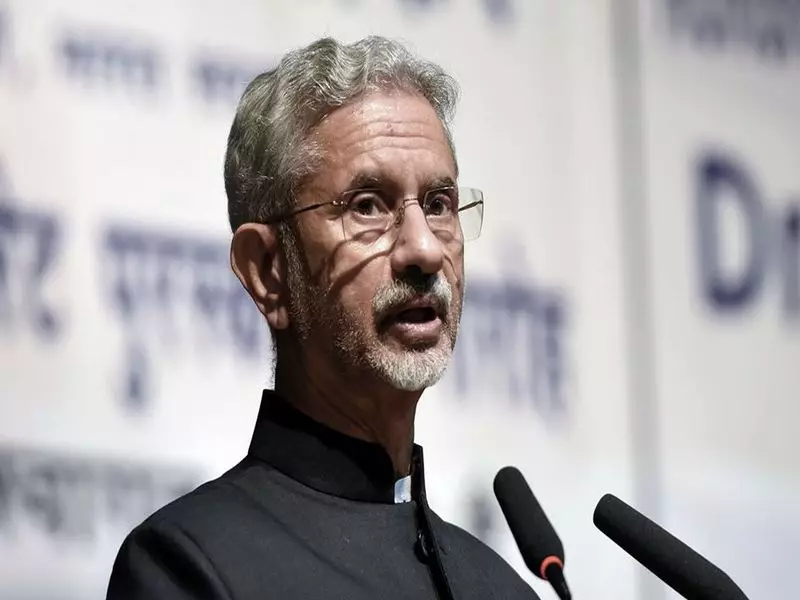
India's External Affairs Minister, Dr. S. Jaishankar, has made a significant statement, describing the relationship between India and Russia as one of the "steadiest" and most "substantial" major relationships on the global stage. His remarks underscore the enduring and resilient nature of the strategic partnership between New Delhi and Moscow, which has weathered significant geopolitical shifts over decades.
Putin's Visit: A Pivot to Reimagined Relations
Jaishankar highlighted the pivotal role of Russian President Vladimir Putin's visit to India in December 2021. He stated that this high-profile visit was instrumental in "reimagining" the bilateral relationship in dimensions it previously lacked. The minister's comments point to a conscious effort by both nations to expand and deepen their engagement beyond traditional areas of cooperation.
The visit, which took place amidst a complex international environment, resulted in the signing of a package of 28 agreements. These accords spanned diverse sectors, signaling a mutual intent to broaden the economic and strategic base of the partnership. The discussions between Prime Minister Narendra Modi and President Putin focused on injecting new momentum and direction into the time-tested ties.

Beyond Defense: Expanding the Partnership Matrix
While the defense and strategic partnership remains a cornerstone of India-Russia relations, Jaishankar emphasized the concerted push to diversify the engagement. The new dimensions actively being pursued include:
- Trade and Economic Cooperation: A strong focus on enhancing bilateral trade and exploring new avenues in the face of global economic challenges.
- Energy Security: Deepening collaboration in the oil, gas, and nuclear energy sectors, with Russia being a key supplier for India's energy needs.
- Science & Technology and Space: Leveraging historical cooperation in these fields for contemporary innovation and joint projects.
- Regional Connectivity: Exploring pathways like the International North-South Transport Corridor (INSTC) to boost trade links.
This diversification is seen as crucial for building a more future-oriented and resilient relationship that is not overly reliant on any single pillar.
Navigating a Multipolar World: The Steadiness Factor
Jaishankar's characterization of the ties as "steady" is particularly noteworthy in the current era of global uncertainty and realignment. He pointed out that the relationship has maintained its essential character and mutual trust despite the changing positions of other major powers and the emergence of new geopolitical blocs.
The minister's analysis suggests that India and Russia have successfully managed to compartmentalize their bilateral engagement from their respective relationships with other countries. This has allowed the partnership to remain focused on mutual national interests, including India's need for strategic autonomy and Russia's pivot to the East. The consistency in high-level dialogue and the ability to address complex issues privately have contributed to this steadiness.
The long history of cooperation, dating back to the Cold War era and solidified through mechanisms like the Annual Summit, provides a strong foundation. Both nations have consistently viewed each other as reliable partners, a perception that continues to hold significant value in contemporary diplomacy.
Future Trajectory and Strategic Implications
Looking ahead, Jaishankar's statements indicate that India is committed to nurturing this special and privileged strategic partnership. The reimagined relationship post-Putin's visit is expected to be more balanced, multi-faceted, and economically driven.
The challenge for both diplomats will be to translate the political steadiness into tangible outcomes in new sectors like trade, technology, and supply chain resilience. As India continues to strengthen ties with Western nations and groupings like the Quad, its ability to maintain an independent and steady relationship with Russia will be a critical test of its multi-alignment foreign policy.

In conclusion, External Affairs Minister S. Jaishankar's robust endorsement of the India-Russia relationship reaffirms its central place in India's foreign policy architecture. The partnership, now being actively reimagined and expanded, is poised to remain a significant and steady factor in the evolving dynamics of a multipolar world order.