

Jaishankar Reaffirms India's Strategic Autonomy Amid Global Energy Shifts
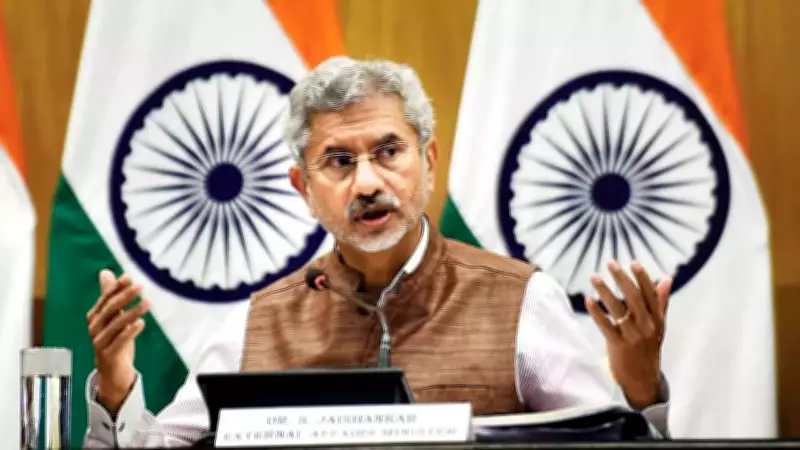
External Affairs Minister S Jaishankar on Saturday delivered a strong statement regarding India's foreign policy stance, asserting that the nation remains firmly committed to strategic autonomy. This declaration came during his participation at the Munich Security Conference, where he addressed evolving global energy markets and shifting international partnerships.
Addressing Energy Concerns and International Relations
Jaishankar was responding to a specific question about whether a recent trade agreement with the United States would impact New Delhi's energy ties with Russia. The query also explored whether India is facing difficulties in exercising its strategic autonomy under current global circumstances. The minister provided a comprehensive response that highlighted India's independent decision-making processes.
"We are very much wedded to strategic autonomy because it's a part of our history and our evolution," Jaishankar emphasized. "It's something which is very deep, and something which cuts across the political spectrum as well."

Complex Global Oil Market Dynamics
When addressing concerns about energy sourcing, the External Affairs Minister described the global oil market as both complex and dynamic. He stressed that commercial considerations primarily guide procurement decisions, with Indian oil companies evaluating multiple factors before making sourcing choices.
"As for energy issues, this is a complex market today," Jaishankar noted. "Oil companies in India, as in Europe, as probably in other parts of the world, look at availability, look at costs, look at risks and take the decisions that they feel are in their best interest."
India maintains that its energy policy is fundamentally driven by national interests. The actual crude sourcing is conducted by oil companies that carefully consider pricing, reliability, and various other market conditions before making procurement decisions.
Recalculations in a Changing Global Environment
Jaishankar observed that in today's rapidly changing global environment, countries continuously reassess their calculations and partnerships. "So many things are changing, and so many of us are doing our calculations and recalculations," he remarked.
The minister acknowledged that while India may not agree with all partners on every issue, maintaining dialogue and demonstrating willingness to find common ground remain critically important. "We would not necessarily agree on everything but I do believe that by doing that, and if there is an inclination to find common ground and overlaps, that would happen," he explained.
Independent Decision-Making and Global Security Contributions
Highlighting India's independent decision-making approach, Jaishankar stated: "If the bottom line of your question is would I remain independent-minded and make my decisions? And would I make choices which sometimes may not agree with your thinking or somebody else's thinking, yes, it can happen."
During the Munich Security Conference 2026, Jaishankar met with G7 foreign ministers and their global counterparts. He reiterated India's support for the UN80 agenda while underscoring New Delhi's significant role in safeguarding global security.
The External Affairs Minister also emphasized India's contributions to international security through several key areas:
- Safeguarding sea lines of communication
- Acting as a first responder in crises
- Strengthening port security measures
- Contributing to resilient submarine cable infrastructure
These statements collectively reinforce India's position as an independent global actor that makes decisions based on national interest while actively contributing to international security frameworks. Jaishankar's remarks at the prestigious security conference provide clear insight into how India navigates complex international relationships while maintaining its strategic autonomy in energy policy and broader foreign relations.






