

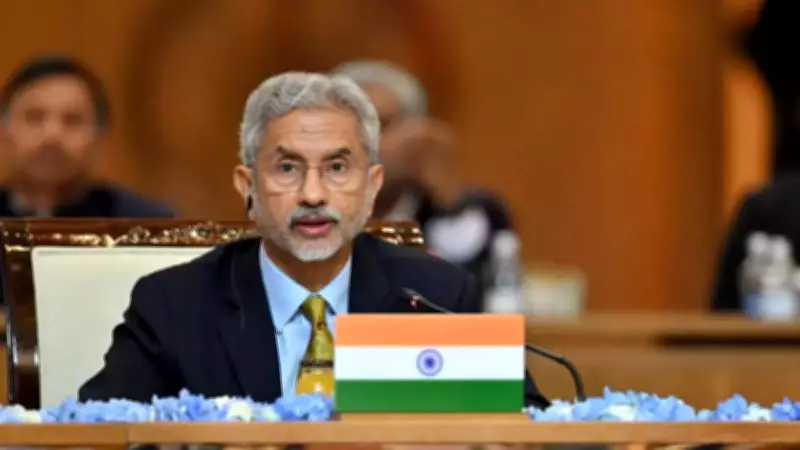
Jaishankar Rejects Pakistan-Style Mediation Role for India in Iran Conflict
External Affairs Minister S Jaishankar on Wednesday firmly stated that India is not a "go-between country" like Pakistan, amid growing reports of mediation efforts in the ongoing Iran conflict. The remarks came during a crucial all-party meeting convened to address the escalating tensions in West Asia.
Government's Stance on Mediation and Regional Dynamics
According to sources present at the meeting, Jaishankar highlighted that there is "nothing new" in Pakistan's mediation efforts, noting that the country has been "used" by the United States since 1981. The government refuted opposition charges that India has remained silent on the situation, asserting that New Delhi has been actively commenting and responding to developments.
The government emphasized its primary concerns: ensuring the security of the Indian diaspora in the Gulf region and fulfilling domestic energy requirements. Officials reported that India has been successful on both fronts so far, with adequate stockpiles and diversified sources of crude oil and gas from 41 countries.

Diplomatic Successes and Energy Security
In a significant diplomatic achievement, the government revealed that four India-bound ships carrying petroleum products have already crossed the strategic Strait of Hormuz, with five more expected to cross soon. However, 18 India-bound vessels remain stranded around the strait due to the conflict.
Regarding the recent US attack on an Iranian ship, the government clarified that had the incident occurred in Indian waters, the vessel would have been protected. Unfortunately, the ship was near Sri Lankan waters at the time. The government expressed that Iran feels "a sense of gratitude" as India has protected other ships and sailors in the region.
Opposition Criticism and Demands for Parliamentary Debate
The opposition, however, found the government's responses "unsatisfactory." Congress leader Tariq Anwar criticized the administration, stating that while Pakistan is performing a mediator's role, India remains "mute spectators." He demanded debates in both Lok Sabha and Rajya Sabha under specific parliamentary rules to address the West Asia situation comprehensively.
CPI-M leader John Brittas echoed these concerns, noting that opposition parties expressed disapproval of the government's silence. He highlighted questions about India's position regarding the US attack on Iran, Prime Minister Narendra Modi's visit to Tel Aviv, and Pakistan's proactive role in mediation efforts.
High-Level Government Representation and Meeting Details
The all-party meeting featured strong government representation, including all Union ministers part of the Cabinet Committee on Security:
- Defence Minister Rajnath Singh
- Home Minister Amit Shah
- External Affairs Minister S Jaishankar
- Finance Minister Nirmala Sitharaman
Additionally, Union Health Minister JP Nadda and Parliamentary Affairs Minister Kiren Rijiju attended the session. Foreign Secretary Vikram Misri made a detailed presentation before the gathering, which lasted nearly two hours and included opposition leaders from multiple parties.
Government's Balanced Diplomatic Approach
The government articulated its balanced diplomatic stance, stating: "We are good friends with everyone - the US is our largest trading partner, Israel is our largest technological partner and we have good relations with Iran too." This approach reflects India's strategy of maintaining constructive relationships with all key players in the region while prioritizing national interests.
Defence Minister Singh delivered the opening remarks, with Jaishankar and Petroleum Minister Hardeep Singh Puri also addressing the gathering. During the question-and-answer session, Jaishankar primarily responded to opposition queries, with occasional interventions from Home Minister Shah.
Post-Meeting Statements and Political Reactions
Briefing reporters afterward, Parliamentary Affairs Minister Kiren Rijiju stated that the meeting was convened at Prime Minister Narendra Modi's direction to share information about the West Asia crisis. He expressed satisfaction that all opposition questions were comprehensively addressed by the government.

Rijiju noted that opposition members ultimately pledged unity and support for government decisions during the crisis. However, Congress leader Tariq Anwar maintained that the meeting failed to provide adequate clarification, reinforcing demands for parliamentary debate.
The absence of certain opposition figures, including Lok Sabha Leader of Opposition Rahul Gandhi and TMC members, drew criticism from Union Minister Pralhad Joshi, who described it as "highly irresponsible" behavior.
As tensions continue in West Asia, India's government maintains its position of avoiding mediation roles while focusing on practical measures to protect national interests and citizens abroad.





