

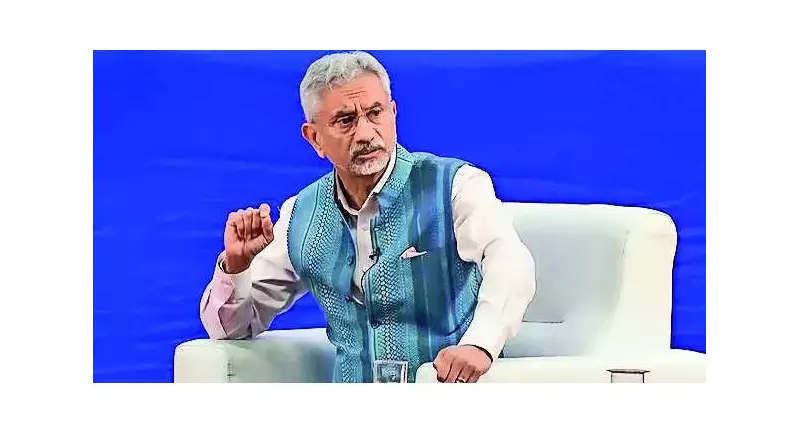
External Affairs Minister Dr. S Jaishankar delivered a robust message on India's foreign policy and security stance during an address at the Indian Institute of Technology (IIT) Madras on Friday. He unequivocally stated that the nation reserves the absolute right to defend itself against terrorism in any manner it deems fit, without being obligated to provide justifications to other countries.
Unapologetic Stance on National Security
Jaishankar declared that if any country persists with deliberate and unrepentant terrorism, India will exercise its fundamental right to protect its citizens. He emphasized that the methodology of this defense is solely India's decision. "How we exercise that right is up to us. Nobody can tell us what we should or should not do," the minister told the gathering of students at the launch of the IIT Madras Global Research Foundation.
Drawing a clear line, he explained that gestures of goodwill cannot coexist with sustained hostility. He cited the now-suspended Indus Waters Treaty with Pakistan as a prime example. "It was a gesture of good neighbourliness. But if you have had decades of terrorism, there is no good neighbourliness... You can't say, 'Please share water with me, but I will continue with terrorism'. That's not reconcilable," Jaishankar asserted.

Contrasting Neighbourhood Diplomacy: From Aid to Assertion
While speaking about challenges with "bad neighbours," the External Affairs Minister also highlighted India's role as a benevolent and reliable partner to "good neighbours." He provided concrete instances of India's supportive role during crises.
These included sending vital COVID-19 vaccines to Sri Lanka amidst the pandemic and extending financial aid worth $4 million for cyclone relief efforts. Regarding his recent visit to Bangladesh, a relationship that has seen strains, Jaishankar said he went to pay last respects to former Prime Minister Khaleda Zia. He conveyed a message of shared prosperity: "Most of our neighbours now know if India grows, all of them grow."
India as a Global Human-Resource Power
Jaishankar described India as a "human-resource power" that must leverage its strengths on the world stage. He connected institutional excellence with foreign policy influence, noting that when premier institutions like IIT Madras expand globally, they add significant strength to the nation's diplomatic arsenal.
Addressing a specific query from a student from Arunachal Pradesh about harassment faced by an Indian passport holder from the state at Shanghai airport, the minister was categorical. "We protested this incident. Arunachal Pradesh is and will always be a part of India," he stated, reaffirming India's territorial integrity.
The minister's comprehensive address wove together themes of hardline security policy, nuanced neighbourhood diplomacy, and the soft power of India's knowledge economy, presenting a multifaceted view of the country's contemporary global engagement.






