

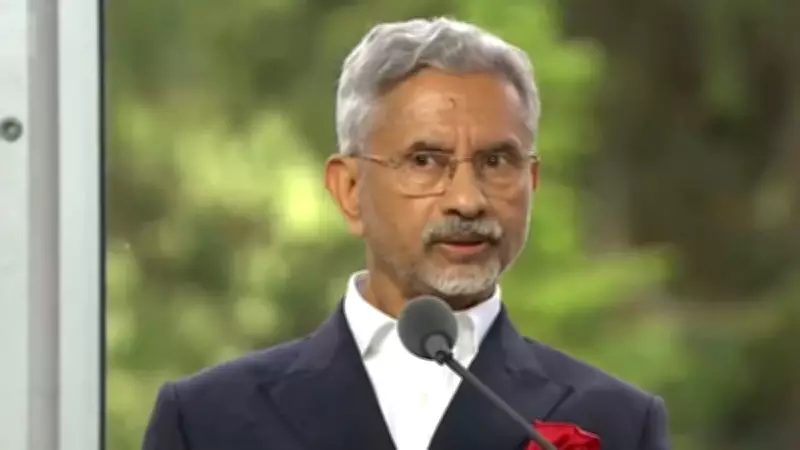
External Affairs Minister S Jaishankar on Tuesday took a strong stance against European nations for selling weapons that are subsequently used to attack India. Speaking at an event, Jaishankar highlighted the hypocrisy of countries that criticize India's purchase of Russian oil while themselves engaging in arms sales that harm Indian interests.
Jaishankar's Remarks on European Arms Sales
Jaishankar pointed out that some European countries sell weapons to India's adversaries, which are then used against Indian forces. He emphasized that this practice undermines the principles of sovereignty and non-interference. The minister did not name specific countries but made it clear that such actions are unacceptable.
Double Standards on Russian Oil
The External Affairs Minister also addressed the criticism India faces for importing oil from Russia amid the Ukraine conflict. He called out the United States for its double standards, noting that while the US and its allies impose sanctions on Russia, they continue to purchase Russian oil themselves. Jaishankar argued that India's energy security is paramount and that it will continue to make decisions based on its national interests.

Jaishankar's comments come at a time when India is balancing its relationships with Western nations and Russia. India has not condemned Russia's invasion of Ukraine and has increased its purchase of Russian oil, drawing criticism from the US and Europe. However, Jaishankar asserts that India's actions are consistent with its foreign policy of strategic autonomy.
India's Stance on Global Conflicts
The minister reiterated India's position on the Ukraine conflict, calling for dialogue and diplomacy to resolve the crisis. He stressed that India's approach is based on its own historical experiences and national interests. Jaishankar also mentioned that India is not alone in its stance, as many countries in the Global South share similar views.
In conclusion, Jaishankar's statements reflect India's growing assertiveness in international forums, challenging the narratives of major powers and advocating for a multipolar world order.






