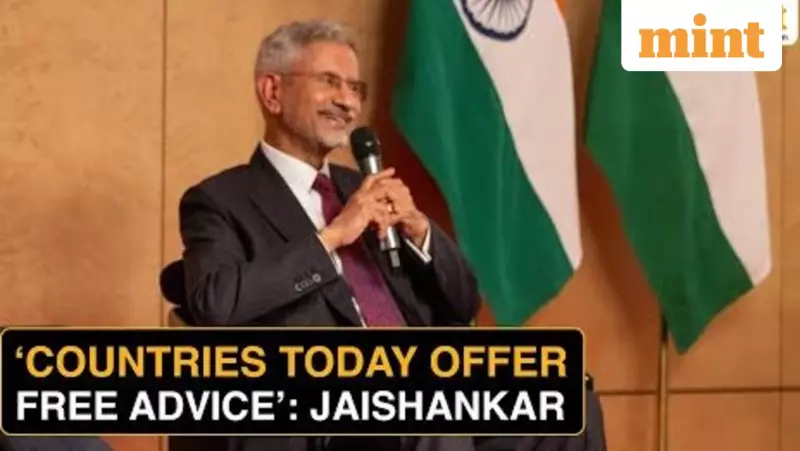
India's External Affairs Minister, Dr. S Jaishankar, delivered a sharp critique of Western nations on Wednesday, accusing them of often acting in their own "selfish interests" while freely dispensing advice to others. In a pointed address, he highlighted the stark contrast between Western rhetoric and actions, using the successful Operation Sindoor as a prime example of India's independent and effective diplomatic approach.
Jaishankar's Critique of Western Double Standards
The minister did not mince words when describing the foreign policy conduct of some Western countries. He argued that a pattern exists where these nations offer unsolicited guidance—termed "free advice"—to countries like India, while their own decisions are primarily driven by national self-interest. Jaishankar emphasized that this hypocrisy is increasingly evident on the global stage, where preaching often does not match practice. His remarks underscore a growing assertiveness in Indian diplomacy, which now confidently calls out perceived double standards.
Operation Sindoor: A Case Study in Indian Resolve
To solidify his argument, Jaishankar referenced Operation Sindoor, a mission conducted by the Indian government. While specific operational details are often classified, such operations typically involve the repatriation of Indian citizens from conflict zones or complex international situations. By citing this example, the minister aimed to demonstrate India's capability to manage critical situations through its own strategic planning and execution, without relying on the often-conditional or interest-driven support from Western powers. This serves as a powerful symbol of India's sovereign decision-making and diplomatic strength.

The Implications for Global Diplomacy
Jaishankar's comments reflect a broader shift in how emerging powers are engaging with traditional Western-led global order. The speech signals that India will continue to base its foreign policy on a clear-eyed assessment of its own national interests and the tangible actions of partners, rather than on their public statements or advice. This approach champions strategic autonomy and positions India as a confident voice advocating for a more multipolar and equitable world where the rules are not set by a select few. The minister's forthright language marks a definitive move towards calling out inconsistencies that many in the Global South have long observed but seldom articulated so openly at this level.
The address has resonated widely, sparking discussions on the evolving nature of international relations and the need for a more honest dialogue between nations. It reinforces the Indian government's stance under Prime Minister Narendra Modi of pursuing an independent foreign policy path, one that is willing to question established narratives and assert its position firmly on the world stage.