

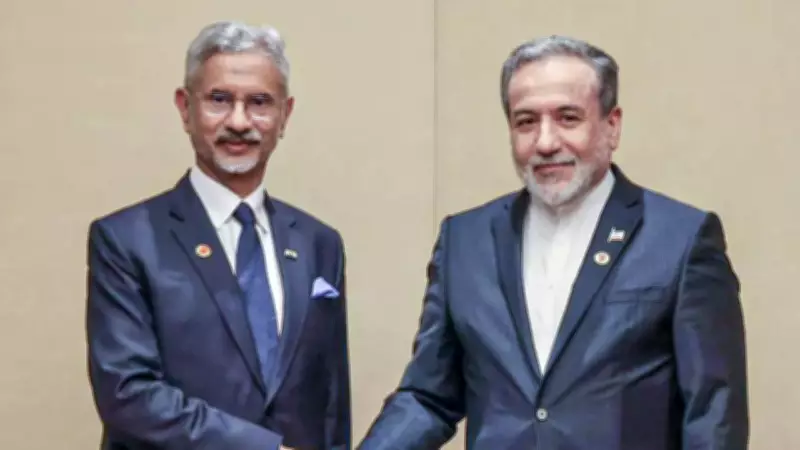
Jaishankar Holds Crucial Talks with West Asian Counterparts on Regional Stability
External Affairs Minister S Jaishankar has engaged in a series of significant diplomatic conversations with his counterparts from Iran, Qatar, and the United Arab Emirates, focusing squarely on the urgent need to restore stability and security to the volatile West Asia region. These discussions, held over the weekend, underscore India's proactive role in supporting international efforts to de-escalate tensions and bring an end to the ongoing conflict.
India's Stance on Regional Peace Efforts
In a detailed conversation with Iran's Foreign Minister Seyed Abbas Araghchi, Jaishankar explicitly stressed India's firm support for all ongoing regional and international initiatives aimed at stopping the war. According to an official Iranian readout released on Monday, the dialogue highlighted the critical importance of collaborative efforts to address the security challenges plaguing West Asia. Jaishankar's emphasis aligns with India's longstanding policy of advocating for peaceful resolutions through diplomacy and dialogue.
Iran's Accusations and Calls for International Action
During the exchange, Araghchi presented a stark account of what he described as "heinous crimes" committed by American and Israeli forces against the Iranian populace. He detailed attacks targeting Iran's industrial and production infrastructure, as well as its "peaceful and safeguarded nuclear facilities." Furthermore, Araghchi pointed to continued rhetoric from American officials that he claimed openly threatens Iran's energy infrastructure.

Araghchi also issued a pointed reminder to the international community and the United Nations, urging them to fulfill their responsibility in confronting what he termed "law-breaking and the normalisation of war crimes." This appeal underscores the deep-seated grievances and the complex geopolitical tensions at play in the region.
Qatar's Concerns and Diplomatic Priorities
In a separate conversation with Qatar's Foreign Minister Mohammed bin Abdulrahman bin Jassim Al-Thani, the focus shifted to the alarming military escalation and its severe repercussions on both regional and international security and stability. A Qatari readout of the discussion revealed that the two ministers thoroughly reviewed the escalating situation and its broader implications.
Minister Al-Thani stressed the imperative to halt what he referred to as the "unjustified Iranian attacks" on Qatar and other nations in the region. He issued a stern warning against the irresponsible targeting of vital infrastructure, particularly facilities related to water and energy, which are crucial for civilian welfare and global supply chains.
Emphasizing a path forward, the Qatari minister highlighted the necessity to strengthen coordination and intensify joint diplomatic efforts. He advocated for a return to the negotiating table, prioritizing reason and wisdom to effectively contain the crisis. A key component of this approach, he noted, is ensuring global energy security, which remains threatened by the ongoing instability.
Broader Diplomatic Outreach
Beyond the talks with Iran and Qatar, Jaishankar also held discussions with his counterpart from the United Arab Emirates, rounding out a comprehensive diplomatic outreach to key West Asian nations. These concerted efforts reflect India's strategic interest in the region, not only due to energy and economic ties but also because of the large Indian diaspora residing there.
The series of conversations demonstrates India's commitment to acting as a responsible stakeholder in international affairs, leveraging its diplomatic channels to advocate for peace, stability, and a cessation of hostilities in one of the world's most turbulent regions.






