

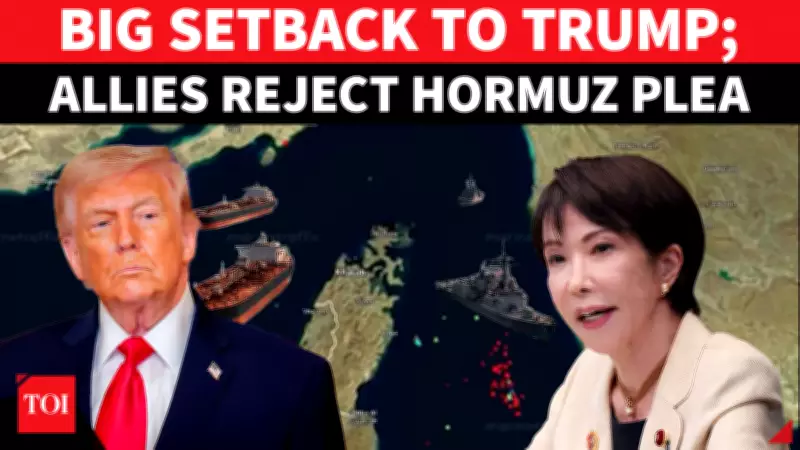
Trump Faces Diplomatic Rebuff Over Hormuz Blockade
In a significant diplomatic development, two of America's closest allies in the Asia-Pacific region have publicly declined a request from US President Donald Trump to deploy warships to the Strait of Hormuz. This refusal comes amid a severe crisis where Iran has largely blocked the strategic waterway, disrupting approximately 20% of the world's oil supply.
Allies Stand Firm Against Pressure
The governments of Japan and Australia have explicitly stated that they have no plans to send naval vessels to the region, despite what sources describe as growing pressure from Washington. This collective stance represents a notable setback for the Trump administration's efforts to form a multinational coalition to address the blockade.
The current crisis was triggered by recent US and Israeli airstrikes, which prompted Iran to effectively seal off the strait. Analysts are calling this the most significant oil supply disruption in modern history, with immediate repercussions for global energy markets and geopolitical stability.

Strategic and Economic Implications
The Strait of Hormuz is a chokepoint for maritime trade, with an estimated one-fifth of globally traded oil passing through its narrow confines. The blockade has:
- Sent shockwaves through international oil markets, causing price volatility.
- Raised urgent questions about energy security for oil-importing nations.
- Intensified existing Middle East tensions into a broader international standoff.
The refusal by Japan and Australia to provide military support underscores the complex diplomatic calculations at play. Both nations maintain important economic and strategic relationships with multiple actors in the region, and a direct naval deployment could jeopardize those ties.
A Weakened Coalition Effort
President Trump's call for allied warships was aimed at demonstrating a unified international front to secure the strait and ensure the free flow of commerce. The rejection by Tokyo and Canberra suggests a lack of consensus among traditional US partners on how to respond to Iran's actions, potentially leaving the United States to shoulder a greater burden of any military or security operation.
This development occurs against a backdrop of escalating regional conflict, as seen in related reports of drone attacks on Gulf states and Iranian threats against US and Israeli interests. The Hormuz blockade is now the focal point of a rapidly evolving crisis with no clear diplomatic resolution in sight.
The decisions by Japan and Australia highlight a cautious approach, prioritizing diplomatic channels and regional stability over immediate military escalation. As the situation develops, the international community watches closely to see if other nations will answer Washington's call or if this marks a broader trend of allied reluctance in the face of complex Middle Eastern geopolitics.






