

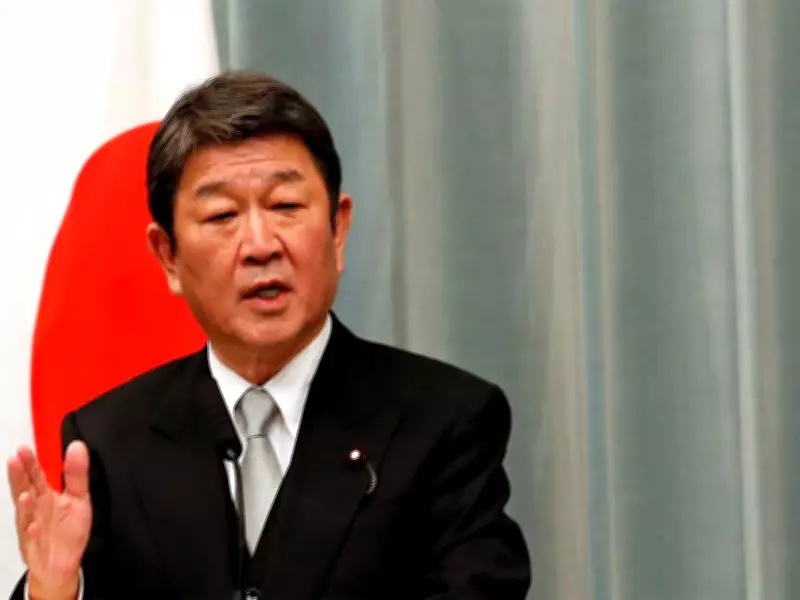
Japan Explores Potential SDF Minesweeping Role in Strait of Hormuz Following Ceasefire
In a significant development, Japanese Foreign Minister Toshimitsu Motegi has indicated that Japan might consider deploying its Self-Defense Forces (SDF) for minesweeping operations in the strategic Strait of Hormuz. This potential move is contingent upon the realization of a ceasefire in the ongoing conflict involving Iran, the United States, and Israel, as reported by Kyodo News.
Diplomatic Context and Conditions for Deployment
During a recent television appearance, Motegi emphasized Japan's advanced maritime capabilities, stating, "Japan's minesweeping technology is at the top level in the world." He elaborated on the conditions under which such a deployment could be discussed, noting, "Let's say (the parties have entered into a) cease-fire, and in the event that mines pose an obstacle, we may have to think about it." These remarks follow high-level diplomatic engagements in Washington last Thursday, where Motegi attended the Japan-U.S. summit.
At the summit, U.S. President Donald Trump appeared to acknowledge Japan's constitutional and legal constraints regarding military deployments, as Japanese Prime Minister Sanae Takaichi clarified the statutory limits. Motegi clarified that there was "no specific promise" made during the talks, nor were there any immediate issues requiring deliberation by the Japanese government.

Regional Tensions and Global Implications
The regional situation remains critical following airstrikes launched by U.S. and Israeli forces against Iran on February 28. This escalation has significant ramifications for global energy security and Middle Eastern stability. For Japan, which depends on the region for more than 90 percent of its crude oil imports, the stakes are particularly high. The Strait of Hormuz is a vital chokepoint for oil shipments, and any disruption could severely impact Japan's economy and energy supply.
Humanitarian and Diplomatic Developments
In a related development, Motegi confirmed the release of one of two Japanese nationals previously detained in Iran. The individual, who had been in custody since June, departed via Azerbaijan last Wednesday and arrived in Japan on Sunday in good health. The Japanese government is now intensifying efforts to secure the freedom of the remaining detainee, with Motegi stating, "We are working towards the early release of the other individual." Reports suggest the second individual is the Tehran bureau chief of the public broadcaster NHK, taken into custody on January 20.
This situation underscores the complex interplay between diplomatic efforts, regional conflicts, and Japan's strategic interests. As tensions in the Middle East continue to evolve, Japan's potential role in minesweeping operations highlights its commitment to maritime security and international cooperation, while navigating its constitutional limitations.






