

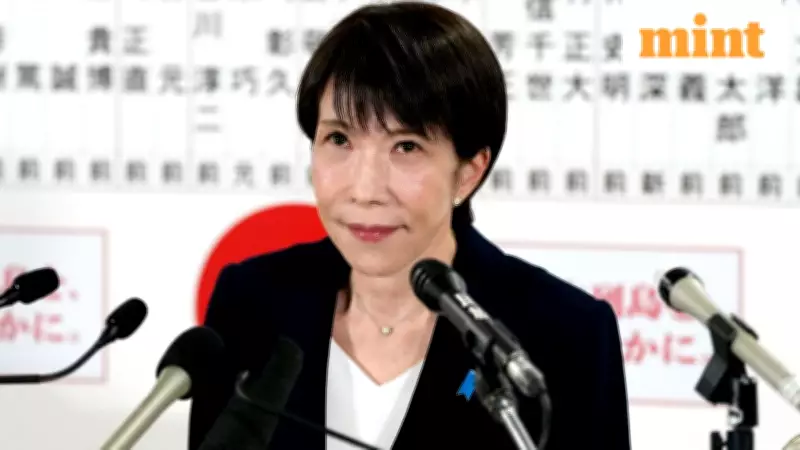
Japan's Prime Minister Sanae Takaichi Discloses Modest Personal Wealth Following Historic Election Win
Prime Minister Sanae Takaichi of Japan has officially declared combined assets totaling approximately ¥32.1 million, equivalent to around $220,000, with her husband, former lawmaker Taku Yamamoto. This financial disclosure places her tenth among cabinet ministers in terms of declared wealth, positioning her as one of the less affluent members of Japan's political leadership.
Detailed Breakdown of Assets and Family Background
According to official records cited by Nippon.com, Takaichi's personal assets include ¥11.4 million in real estate located in Nara Prefecture. Her husband, Taku Yamamoto, holds real estate valued at ¥10.6 million along with bank deposits amounting to about ¥10 million. Additionally, Prime Minister Takaichi owns two vehicles, completing the couple's financial portfolio.
The personal life of Sanae Takaichi reveals a complex family narrative. She first married Taku Yamamoto in 2004, divorced in 2017, and remarried him in 2021. The couple has no biological children together; however, Takaichi adopted Yamamoto's children from his previous marriage and is now a grandmother. In a poignant turn of events, Yamamoto suffered a cerebral infarction in 2025, resulting in partial paralysis, with Takaichi currently serving as his primary caregiver.

Historic Election Victory and Political Consolidation
This asset disclosure follows closely on the heels of a monumental political achievement. Prime Minister Takaichi's Liberal Democratic Party secured a historic landslide victory in Japan's snap election, winning an unprecedented 316 seats in the 465-member House of Representatives. This remarkable result comfortably surpasses the absolute majority threshold of 261 seats and represents the largest seat haul in the party's history since its founding in 1955.
The scale of this victory eclipses the previous record of 300 seats achieved under former Prime Minister Yasuhiro Nakasone in 1986. While the ruling coalition does not command a majority in the upper house, the overwhelming lower-house triumph provides Takaichi with substantial legislative flexibility and political capital until the next scheduled election cycle in 2028.
Public Persona and Personal Journey
Sanae Takaichi has cultivated a distinctive public image as a hard-line conservative politician with populist appeal, particularly resonating with younger voters. Her political ascent has sparked renewed interest in her unconventional personal background and journey to power.
Born in Yamatokōriyama, Nara Prefecture, to a middle-class, dual-income family, Takaichi's early life was marked by determination and diverse experiences. Her father worked for an automotive firm associated with Toyota, while her mother served in the Nara Prefectural Police. Despite qualifying for prestigious private universities like Keio and Waseda, she chose Kobe University, enduring long commutes from home while supporting herself through part-time employment.
Takaichi graduated with a business administration degree in 1984 and later studied at the Matsushita Institute of Government and Management. Her pre-political career included working as a television broadcaster and author, and she notably played drums in a heavy metal band during her youth.
Political Trajectory and Ideological Stance
Sanae Takaichi entered national politics as an independent candidate in the 1993 general election, formally joining the Liberal Democratic Party in 1996. As a close protégé of former Prime Minister Shinzo Abe, she steadily ascended through party ranks, holding significant portfolios in economic and technology sectors before serving as Minister for Internal Affairs and Communications.
In this role, she became known for her firm stance on media regulation and governance reform. Takaichi emerged as a central figure in Abe-era conservatism, openly advocating for constitutional revision, a strengthened military posture, and a revisionist perspective on Japan's wartime history.
The combination of her modest personal wealth, compelling personal story, and historic political achievement presents a multifaceted portrait of Japan's current prime minister as she navigates both personal challenges and national leadership responsibilities.






