

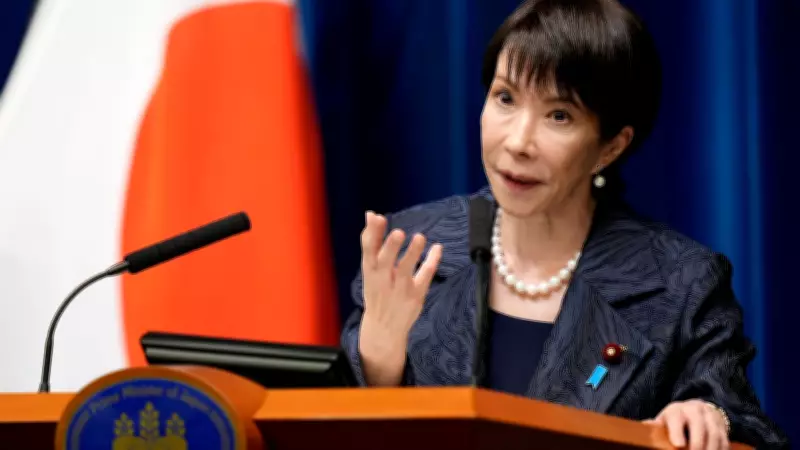
Japan's Prime Minister Sanae Takaichi Secures Commanding Majority in High-Stakes Snap Election
In a bold political move, Japan held a high-stakes snap general election, triggered by Prime Minister Sanae Takaichi, the nation's first female leader. Takaichi has successfully capitalized on her honeymoon period, with her Liberal Democratic Party (LDP)-Ishin coalition securing a commanding majority. Projections indicate the coalition is nearing the 300-seat mark in the 465-member House of Representatives, which would grant her an absolute stable majority and significantly ease the passage of legislation.
Decoupling from Party Scandals and Gaining Public Trust
Despite the Liberal Democratic Party being battered by scandals for years, Takaichi has adeptly decoupled her personal brand from the party's baggage. In a political culture often characterized by indecisive bureaucrats, her "get things done" attitude and tough stance on China have resonated with voters. This approach earned her approval ratings as high as 70 percent in late 2025, showcasing her charismatic leadership style.
Strategic Election Timing and Opposition Fragmentation
Takaichi called this snap election just three months after taking office, utilizing the shortest campaign period since the end of World War II. By keeping the window small, she effectively prevented the opposition from consolidating. The opposition attempted to form a "centrist reform alliance" but remained deeply divided. The merger between the liberal Constitutional Democratic Party and the more conservative Komeito confused traditional voters, failing to present a coherent alternative vision.

International Endorsement and Security Implications
Another significant factor in Takaichi's favor was international support. In a rare move, former U.S. President Donald Trump publicly endorsed her, describing her as "strong, powerful, and wise." For many Japanese voters, this endorsement signals that Takaichi is the only leader capable of navigating a potentially volatile relationship with the United States, which is viewed as vital for Japan's national security.
Three Interlocking Challenges Facing Prime Minister Takaichi
Despite her electoral success, Takaichi's path forward is fraught with difficulties. She inherits three massive, interlocking challenges that will test her governance skills.
Diplomatic Crisis with China
The first challenge is a diplomatic crisis with China. Takaichi's pledge to formalize security ties with Taiwan has already triggered a psychological siege from Beijing. She must balance this hawkish stance with the economic reality that China remains Japan's largest trading partner. Any further escalation could cripple Japan's semiconductor and automotive supply chains, posing a severe risk to the economy.
Economic Resilience and Market Wariness
The second challenge revolves around the resilience of the Japanese economy. Takaichi's economic plan is aggressive but faces stiff resistance from the global bond market. She has pledged to double defence spending to 2 percent of GDP while simultaneously suspending the food sales tax. This dual approach has made investors and markets wary of the nation's underlying macroeconomic fundamentals, raising concerns about fiscal stability.
Coalition Dynamics with Ishin
The third challenge involves managing the alliance with the Japan Innovation Party, or Ishin. This party is much more aggressive about deregulation and cutting government size. If Ishin sweeps Osaka, as it often does, it will enter coalition negotiations with massive leverage. It will likely demand that Takaichi follow through on radical deregulation and reduce the number of parliamentary seats in exchange for their support on her budget, creating potential friction within the coalition.
Conclusion: Governing Amidst Fractured Society and Regional Tensions
Takaichi's victory demonstrates that her charisma and the phenomenon of "Sanae-mania" have effectively mobilized voters. However, she must now prove her ability to govern a fractured and ageing society while navigating the most dangerous regional security environment since 1945. Her success will depend on addressing these diplomatic, economic, and coalition challenges with strategic foresight and resilience.






