

Japan's Discomfort Over Trump's Pearl Harbor Reference in Iran War Context
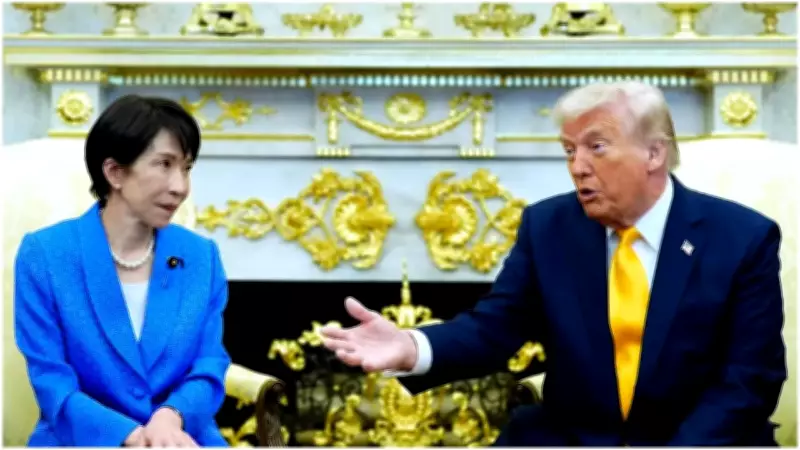
Japan experienced a wave of embarrassment, confusion, and unease on Saturday following President Donald Trump's use of the 1941 attack on US forces at Pearl Harbor to defend his secrecy before initiating the war against Iran. This occurred during a summit in Washington with Japanese Prime Minister Sanae Takaichi seated beside him, highlighting the delicate nature of historical references in US-Japan diplomacy.
Trump's Controversial Justification and Japanese Reaction
On Thursday, when questioned by a Japanese reporter about not informing allies in Europe and Asia ahead of the US attack on Iran, Trump invoked Pearl Harbor, stating, "Who knows better about surprise than Japan? Why didn’t you tell me about Pearl Harbor, OK?" This remark, made in the presence of Prime Minister Takaichi, was reported by Politico and compounded by the sensitivity surrounding public comments on Pearl Harbor, which senior US and Japanese officials typically avoid.
The liberal-leaning Asahi newspaper criticized Trump's comments in an editorial on Saturday, calling them "a piece of nonsense that ignores lessons from history" and arguing they should not be overlooked. Social media reactions ranged from accusations of ignorance and rudeness by the US president to claims that he does not view Japan as an equal partner, with calls for Japan to protest the statement.

Historical Sensitivity and Diplomatic Implications
Tsuneo Watanabe, a senior fellow at the Sasakawa Peace Foundation, noted in an opinion piece for the Nikkei newspaper that Trump's comment signaled he was "not bound by existing American common sense." Watanabe suggested the remark aimed to involve the Japanese reporter or Prime Minister Takaichi in justifying the "sneak attack" on Iran without informing allied countries.
This episode underscores how fresh the political debate about Japan's role in World War II remains, even 80 years after its end. Senior leaders, including Takaichi, have argued that Japan has apologized sufficiently for wartime actions. Takaichi recently hinted at visiting Tokyo's controversial Yasukuni Shrine, which honors war criminals among the war dead, adding to the historical tensions.
The incident was seen as startling in Japan, as it brought history questions into a White House summit, challenging an unspoken understanding between US and Japanese leaders to tread carefully on such subjects. Both nations rely on each other strategically: the US depends on Japan to host 50,000 troops and advanced weapons, while Japan relies on the US nuclear umbrella for defense against hostile neighbors.
Prime Minister Takaichi's Response and Criticism
Prime Minister Sanae Takaichi, described as a hard-line conservative, was praised by some for not reacting overtly to Trump's comments, instead letting them pass with a roll of her eyes and a glance at her ministers. Her primary goal at the summit was to deepen ties with the US, Japan's most important ally, rather than engage in a debate over World War II history. She arrived shortly after Trump suggested Japan was among nations slow to join his call to protect the Strait of Hormuz.
However, others criticized Takaichi for not speaking up. Hitoshi Tanaka, a former diplomat and special adviser at the Japan Research Institute, expressed embarrassment on social media, stating that Takaichi's flattering of Trump undermined an equal partnership. He emphasized, "To make an equal relationship is not to flatter... Just doing what pleases Trump and calling it a success if you are not hurt is too sad."
Reporter's Perspective and Public Sentiment
Initial blame on social media targeted the Japanese reporter, Morio Chijiiwa of TV Asahi, whose question prompted Trump's Pearl Harbor comment. Chijiiwa later explained on a talk show that he asked the question to represent Japanese citizens unhappy with Trump's unilateral attack on Iran and because Japan was being asked to assist. He said, "I found it extremely awkward for him to change the subject."

Junji Miyako, a 53-year-old citizen, noted that Takaichi's flattering of Trump felt more condescending than the president's remark, expressing frustration over her silence on the war. He stated, "I think Trump's Pearl Harbor comment was stupid, but to me the war he started is a much bigger problem."
This incident highlights the ongoing complexities in US-Japan relations, where historical events like Pearl Harbor continue to influence diplomatic interactions and public discourse, even as both countries navigate contemporary security challenges.





