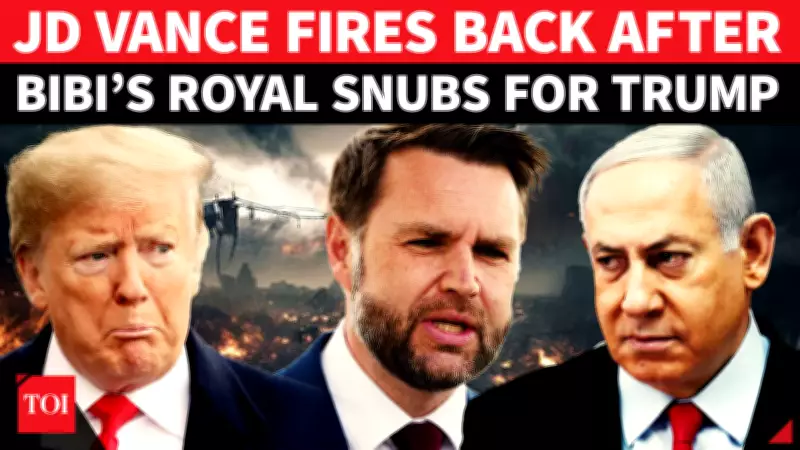
US Vice President JD Vance dropped a diplomatic bombshell on Tuesday, signaling potential rifts between Washington and Tel Aviv over Iran's nuclear ambitions. In a pointed statement, Vance declared that America's foremost priority is preventing Tehran from acquiring a nuclear weapon, even if it means diverging from Israel's stance.
Vance's Stance on Iran Nuclear Deal
Speaking at a press conference, Vance stressed that any future agreement with Iran must be based on strict verification mechanisms, not trust. 'We will pursue what we see as our own national interest,' he said, underscoring that the United States would not be beholden to any ally's agenda when it comes to nuclear non-proliferation.
Implications for US-Israel Relations
The remarks come amid intense diplomatic activity and growing questions over the alignment between the US and Israel on Iran. Vance's blunt language suggests a hardening of the US position, which could strain ties with Israeli Prime Minister Benjamin Netanyahu's government, which has long advocated for a more aggressive approach.

Vance's comments were seen as a direct response to Netanyahu's recent diplomatic snubs of former President Donald Trump, with analysts interpreting them as a message that the US will act independently. 'We don't care if Israel agrees or not,' a senior administration official reportedly said, echoing Vance's sentiment.
Background of the Tensions
The US-Israel relationship has been tested in recent weeks as Washington engages in backchannel talks with Iran over a new nuclear framework. Israel has expressed deep concerns about any deal that does not completely dismantle Iran's nuclear program. However, Vance made it clear that the US would prioritize its own security assessments.
'Our intelligence indicates that Iran is closer than ever to a bomb,' Vance said. 'We cannot afford to rely on trust. We need verifiable, enforceable commitments.' He added that the US would continue to coordinate with allies but would not outsource its decision-making.
Reactions from Israel and Iran
Israeli officials have not yet officially responded to Vance's remarks, but sources in Jerusalem expressed disappointment. Meanwhile, Iranian state media seized on the comments as evidence of a split between Washington and Tel Aviv, calling it a 'victory for Iran's diplomacy.'
Regional experts warn that any perceived rift could embolden Iran and complicate ongoing ceasefire efforts in the Gulf. The US has been mediating between Iran and Gulf states, with a fragile truce in place near the Strait of Hormuz.
Broader Context
Vance's statement is part of a broader recalibration of US foreign policy under the current administration. The Vice President has been increasingly vocal about reasserting American interests on the world stage, even at the expense of traditional alliances.
The development also comes as the US military shot down Iranian drones over the Strait of Hormuz, highlighting the volatile security situation in the region. Vance's tough talk is likely aimed at reassuring both domestic and international audiences that the US remains committed to preventing a nuclear-armed Iran.