

José Mujica: The 'Poorest President' Who Redefined Leadership with Humility
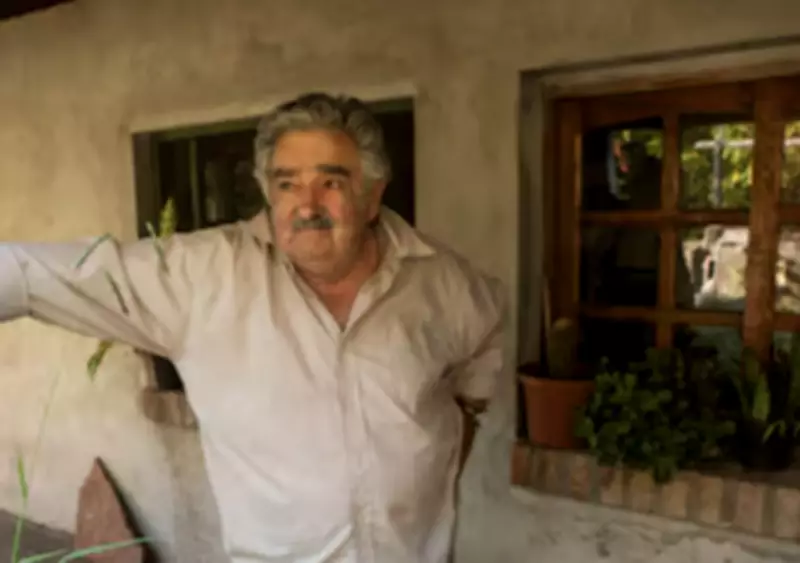
On the dusty outskirts of Montevideo, far from the marble halls and motorcades typical of political power, stood a small farmhouse that served as the home of a president. The man who lived there watered flowers in his garden, shared his space with a three-legged dog named Manuela, and drove to work in a faded blue Volkswagen Beetle. His name was José Mujica, a leader who quietly but profoundly redefined what political power could look like in the modern world.
A Childhood Shaped by Hardship and Dignity
José Alberto Mujica Cordano was born on May 20, 1935, in Montevideo, Uruguay's capital city. His father, a small farmer, died when Mujica was still a child, leaving his mother—the daughter of poor Italian immigrants—to raise him in modest circumstances. The young Mujica grew up surrounded by agriculture and economic hardship, experiences that would fundamentally shape his worldview throughout his life.
He often described his upbringing not as miserable poverty, but as "dignified poverty"—a life where survival required constant effort but human dignity remained intact. In his youth, he developed a deep interest in politics, particularly the struggles of workers and farmers. This passion soon pushed him toward radical political activism that would define the next chapter of his life.

From Guerrilla Fighter to Political Prisoner
During the 1960s, Mujica joined the Tupamaros, a left-wing urban guerrilla movement that emerged in response to growing inequality and political unrest in Uruguay. The group carried out various actions including robberies, kidnappings, and armed confrontations aimed at challenging the government. During one such confrontation with police forces, Mujica was shot six times and later captured by authorities.
Over the subsequent years, he was arrested multiple times and eventually spent nearly 13 years in prison during Uruguay's military dictatorship. Mujica was among the regime's so-called "nine hostages"—prisoners the military threatened to execute if the Tupamaros resumed armed operations. Much of his imprisonment was spent in harsh conditions and extreme isolation, at times confined to wells or underground cells.
Those years of confinement changed him profoundly. The forced isolation provided time for deep reflection about life, power, and violence. When democracy finally returned to Uruguay in 1985, Mujica emerged from prison not as a militant revolutionary but as a man ready to pursue meaningful change through democratic political processes.
A President Who Rejected Traditional Privilege
Decades after his imprisonment, the former political prisoner achieved something remarkable. In 2009, Mujica won Uruguay's presidential election and took office in 2010, serving a full term until 2015. Yet the presidency did little to change how he lived his daily life. While most heads of state occupy grand official residences, Mujica refused to move into Uruguay's presidential palace.
Instead, he continued living with his wife, Lucía Topolansky, on their modest flower farm outside Montevideo. His daily commute to the presidential office was often made in a battered 1987 Volkswagen Beetle. Security was minimal by presidential standards, and visitors were sometimes greeted by their famous three-legged dog, Manuela, wandering freely through the garden.
The striking contrast between Mujica's lifestyle and traditional political power was so pronounced that journalists around the world began calling him "the world's poorest president." But Mujica himself rejected this label, suggesting that poverty was not about owning little but about endlessly wanting more.
Giving Away the Majority of His Salary
The nickname partly stemmed from an extraordinary financial decision. During his presidency, Mujica donated approximately 90 percent of his monthly presidential salary—roughly $12,000—to charities and programs supporting poor people and small entrepreneurs. After these substantial donations, he kept only a small portion for himself, roughly equivalent to the average income of an ordinary Uruguayan citizen.

For Mujica, this choice was simple and logical. He believed politics should serve society rather than enrich leaders. He once explained that living simply allowed him to remain truly free—owning fewer things meant fewer worries and fewer compromises in his political decision-making.
Leading a Small Nation with Bold Progressive Reforms
Despite his humble personal lifestyle, Mujica presided over one of the most progressive periods in Uruguay's modern history. During his presidency, Uruguay achieved several landmark reforms:
- Legalization of same-sex marriage
- Decriminalization of abortion
- Becoming the first country in the world to fully legalize recreational marijuana
- Strengthening of labor rights and increasing minimum wages
- Maintaining economic stability throughout his term
Even political critics acknowledged his unusual authenticity. Mujica spoke plainly and directly, often rejecting the polished, diplomatic language typical of global politics. His straightforward communication style became part of his political identity.
A Legacy Defined by Humility and Integrity
In his later years, Mujica remained an influential voice in Latin American politics and public life. In 2024, he revealed he had been diagnosed with esophageal cancer. On May 13, 2025, he died at the age of 89, just one week before his 90th birthday, at his farmhouse near Montevideo—the same modest home he had never abandoned, even while serving as president.
For many Uruguayans and observers worldwide, Mujica represented something rare in modern politics: integrity without spectacle. He had lived through rebellion, imprisonment, and the highest office in his land. Yet in the end, his most powerful statement was not a speech or a specific policy. It was the quiet message of the life he chose to live—a reminder that true leadership does not always reside in palaces.
Sometimes, genuine leadership grows in small houses at the end of dusty roads, beside gardens of flowers and old cars waiting patiently outside. José Mujica's life demonstrated that political power could be exercised with humility, that material simplicity could coexist with progressive governance, and that authenticity could become a leader's most compelling quality.





