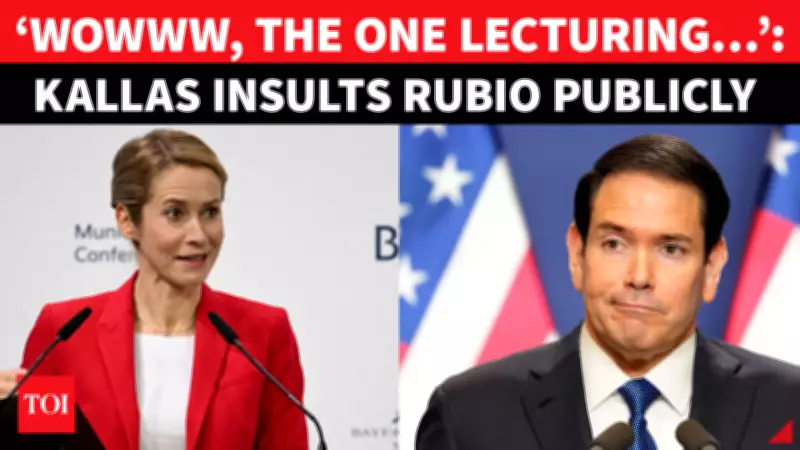
Kallas Confronts Rubio in Fiery Munich Security Conference Exchange
In a dramatic confrontation at the prestigious Munich Security Conference, Estonian Prime Minister Kaja Kallas delivered a public rebuke to US Senator Marco Rubio that left audiences stunned. The fiery clash erupted after Rubio's Europe-focused speech drew sharp criticism from leaders across the continent.
The Audacity of European-Bashing
Kallas directly challenged what she characterized as "European-bashing" in Rubio's address, which had painted a picture of a continent in decline. With remarkable candor, the Estonian leader pushed back against this narrative with a pointed refrain that resonated through the conference hall: "who needs saving from whom?"
The exchange underscored deepening fractures in transatlantic relations as European nations increasingly assert their own strategic voice on the global stage. Kallas's intervention represented a significant moment in the ongoing recalibration of Europe-US partnerships.

A Watershed Moment in Diplomatic Discourse
Observers noted that Kallas's public roasting of Rubio marked a departure from traditional diplomatic decorum at such high-level security forums. The Estonian prime minister's willingness to directly confront an American senator on a public platform signaled a new assertiveness among European leaders.
The Munich Security Conference has long served as a barometer for international relations, and this year's edition revealed growing tensions between traditional allies. Kallas's intervention highlighted how European perspectives on security and global strategy are evolving independently of American viewpoints.
Broader Implications for Transatlantic Cooperation
The confrontation between Kallas and Rubio reflects several critical developments in international politics:
- Europe's growing confidence in articulating its own strategic interests
- Increasing divergence between European and American perspectives on global challenges
- The changing dynamics of diplomatic discourse in multilateral forums
- Heightened tensions within traditional alliances amid shifting global power structures
As European nations continue to develop their own security frameworks and foreign policy approaches, such public disagreements with American counterparts may become more frequent. The Kallas-Rubio exchange serves as a potent symbol of this transitional period in transatlantic relations.
The Munich Security Conference, typically a venue for consensus-building among Western allies, instead became the stage for this remarkable display of diplomatic friction. The incident has sparked widespread discussion about the future of Europe-US cooperation in an increasingly multipolar world.