

Kremlin Dismisses Trump's Assertion on India Halting Russian Oil Purchases
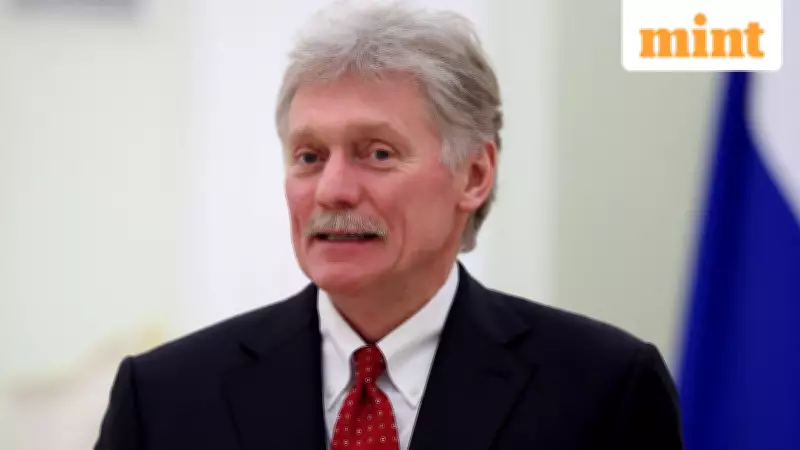
As United States President Donald Trump and his administration continue to assert that India has agreed to "stop" buying Russian oil, the Kremlin has issued a firm response, clarifying that New Delhi retains the freedom to purchase from any country. Kremlin spokesperson Dmitry Peskov addressed the claims, emphasizing that Russia is not India's sole supplier of oil and petroleum products.
Kremlin's Statement on India's Oil Purchasing Freedom
Dmitry Peskov stated, "We, along with all other international energy experts, are well aware that Russia is not the only supplier of oil and petroleum products to India. India has always purchased these products from other countries. Therefore, we see nothing new here." This response came after Peskov was questioned about President Trump's claim that India had agreed to cease buying Russian oil and switch to purchasing crude from the United States and potentially from Venezuela.
In a Truth Social post, Trump announced, "It was an Honor to speak with Prime Minister Modi, of India, this morning. He is one of my greatest friends and, a Powerful and Respected Leader of his Country. We spoke about many things, including Trade, and ending the War with Russia and Ukraine. He agreed to stop buying Russian Oil, and to buy much more from the United States and, potentially, Venezuela. This will help END THE WAR in Ukraine, which is taking place right now, with thousands of people dying each and every week!"

India's Historical and Current Oil Import Patterns
Historically, Russian oil constituted a minimal portion of India's imports, accounting for hardly 0.2 per cent of all crude oil imported until 2021. However, following Western sanctions on Moscow after its invasion of Ukraine in February 2022, India emerged as the largest buyer of discounted Russian crude, with imports peaking at over 2 million barrels per day in mid-2025. Recent data from Kpler indicates a decline to around 1.1 million barrels per day in the first three weeks of January, down from an average of 1.21 million bpd in the previous month.
India, as the world's third-largest oil importer, purchases approximately 88 per cent of its crude oil from overseas, which is refined into fuels like petrol and diesel. This reliance on imports underscores the complexity of abruptly shifting suppliers.
Expert Analysis on Practical Challenges
Igor Yushkov, a leading expert at the National Energy Security Fund, highlighted significant practical hurdles in replacing Russian crude with American alternatives. He explained, "The American shale oil they export is light grades, similar to gas condensate. Russia, on the other hand, supplies relatively heavy, sulfur-rich Urals. This means India will need to blend US crude with other grades, which incurs additional costs, meaning a simple substitution won't be possible."
Yushkov further noted that Russia typically exports 1.5 million to 2 million barrels per day to India, a volume that the United States cannot feasibly cover. He suggested, "So, one gets the sense that Trump is simply trying to show that he won these trade negotiations and the deal was concluded entirely in line with US demands."
Diplomatic and Economic Context
A day prior to Peskov's comments, he mentioned that Russia had not received any official statements from India regarding the cessation of Russian oil purchases. Following the announcement of the India-US trade deal, Foreign Ministry Spokesperson Maria Zakharova reiterated the mutual benefits of hydrocarbons trade between India and Russia. She stated, "We remain convinced that India's purchase of Russian hydrocarbons is beneficial to both countries and contributes to maintaining stability in the international energy market. We are ready to continue close cooperation in this area with our partners in India."
This diplomatic stance aligns with last year's developments, where Trump imposed 50 per cent tariffs on India, including a 25 per cent levy over its oil purchases from Russia, adding another layer of complexity to the trade dynamics.

The ongoing discourse highlights the intricate balance India must maintain in its energy procurement strategies, navigating between geopolitical pressures and economic pragmatism. As global energy markets evolve, India's decisions will significantly impact both domestic fuel security and international relations.





