

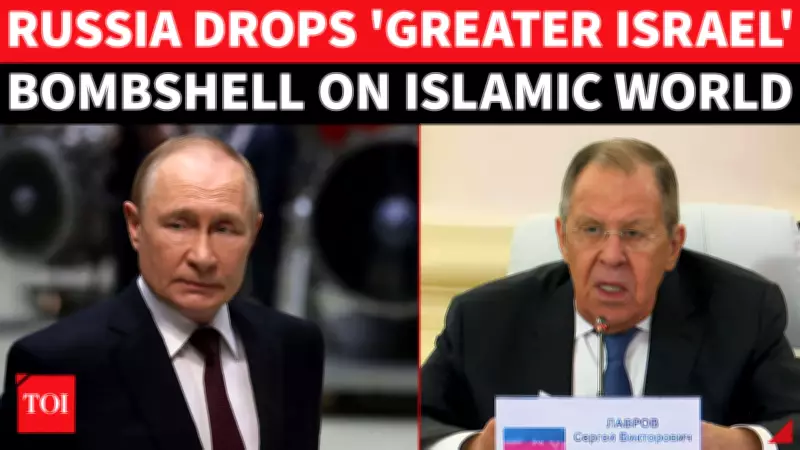
Lavrov's Blistering Critique: West and Israel Accused of 'Unprovoked Aggression'
In a stunning and wide-ranging speech, Russian Foreign Minister Sergei Lavrov has launched a blistering critique of Western and Israeli military actions, framing recent strikes on Iran as "unprovoked aggression." The veteran diplomat delivered his remarks with forceful rhetoric, directly challenging the foreign policies of the United States and its allies.
Accusations of a Western 'Strategic Defeat' Plot Against Russia
Lavrov did not mince words when discussing the ongoing conflict in Ukraine. He accused the West of actively attempting to inflict a "strategic defeat" on Russia by assembling a new military bloc. According to Lavrov, this coalition is being formed under the leadership of Ukrainian President Volodymyr Zelensky, with the explicit goal of undermining Russian sovereignty and influence on the global stage.
Historical Parallels: Comparing Modern Europe to Napoleon and Hitler
One of the most provocative sections of Lavrov's speech drew direct historical parallels. He compared current European political and military movements to the invasions led by Napoleon Bonaparte and Adolf Hitler. Lavrov claimed that modern interpretations of "European values" have, in his view, become synonymous with the revival of Nazism. This inflammatory comparison is likely to escalate diplomatic tensions between Moscow and European capitals.

A Broader Critique of Global Instability
Beyond the immediate conflicts, Lavrov presented a sweeping analysis of global instability. He pointed to several flashpoints as evidence of a "manufactured chaos" trap:
- The ongoing instability and humanitarian crisis in Afghanistan following the Western withdrawal.
- The "stagnation" of the Palestinian cause, which he implied is being neglected by international actors.
- A general pattern of conflict that he argues serves the interests of Western powers.
Lavrov's central argument posits that the world is being deliberately ensnared in a cycle of conflict, from which only a select few nations benefit. His speech represents a significant escalation in diplomatic rhetoric from Moscow, framing Russia not merely as a participant in global affairs, but as a critic of what it perceives as a destructive and hypocritical world order led by the United States and its allies.






