

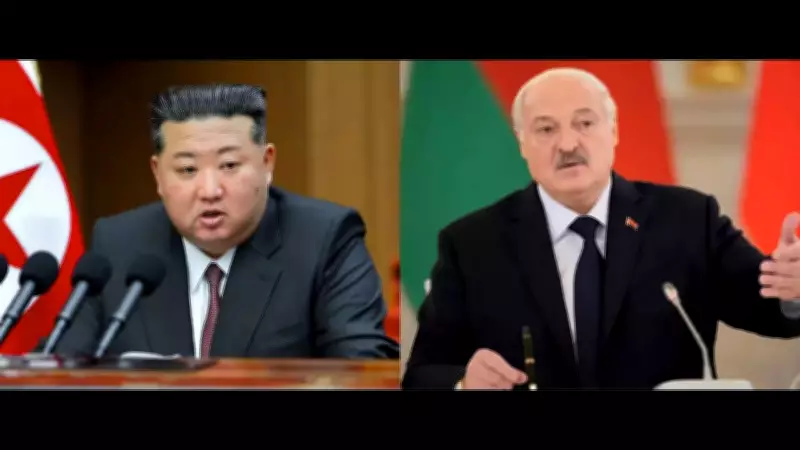
Belarusian President Alexander Lukashenko Begins Historic North Korea Visit
Belarusian President Alexander Lukashenko commenced his inaugural official visit to North Korea on Wednesday, marking a significant diplomatic engagement between two nations that share common ground in facing Western sanctions, maintaining close ties with Russia, and confronting allegations of human rights abuses. The two-day visit, as reported by the Belarusian state news agency Belta, aims to deepen bilateral relations and identify key areas of mutual interest along with the most promising projects for implementation.
Solidarity Among Anti-Western Nations
This high-profile meeting is widely interpreted as a strategic move to show solidarity among countries opposing the Western-led global order. According to Lee Ho-ryung, an analyst at the Korea Institute for Defence Analyses, North Korean leader Kim Jong Un is likely leveraging this occasion to elevate his nation's diplomatic profile and fortify unity within the so-called anti-Western bloc. The leaders previously met in September during a military parade at Beijing's Tiananmen Square, where Kim reportedly extended the invitation for this visit.
Mutual Support in Russia's War Effort
Both Belarus and North Korea have played crucial roles in supporting Moscow's military campaign in Ukraine. Pyongyang has dispatched thousands of ground troops, along with artillery shells, missiles, and rocket systems, primarily to the Kursk region. Estimates from South Korean and Western intelligence agencies indicate that approximately 2,000 North Korean soldiers have been killed, with thousands more wounded. In return, North Korea is believed to be receiving financial aid, military technology, food, and energy supplies from Russia, a relationship further cemented by President Vladimir Putin's visit in 2024.

Belarus, on the other hand, has served as a launchpad for Russia's invasion in 2022, facilitating Moscow's operations. This collaboration has drawn severe Western sanctions against Minsk, similar to those imposed on Pyongyang due to its nuclear weapons program and missile activities.
Diplomatic Exchanges and Future Prospects
In a letter to Lukashenko earlier this month, Kim Jong Un expressed his willingness to expand and develop traditional relations of friendship and cooperation to a new, higher stage, aligning with the demands of the new era, as reported by North Korea's official Korean Central News Agency. Lukashenko reciprocated by affirming Minsk's interest in actively expanding political and economic ties with Pyongyang at all levels.
Human Rights Concerns and Domestic Crackdowns
International rights organizations have leveled serious accusations against the North Korean regime, including:
- Torture and public executions
- Operation of prison camps and forced labor
- Severe restrictions on freedom of expression and movement
Meanwhile, Lukashenko has tightened his grip on power in Belarus over three decades, moving the country deeper into Russia's orbit and cracking down on dissent. The West imposed heavy sanctions following Minsk's role in the Ukraine invasion and the violent suppression of protests in 2020. Despite recent releases of prisoners—including 250 earlier this month, largely due to U.S. efforts—Belarus still holds hundreds of political prisoners, many arrested after the disputed 2020 election.
Shifting International Dynamics
In a notable shift, U.S. President Donald Trump has sought to build ties with Belarus during his second term, easing sanctions and welcoming it to his Board of Peace. This development occurs amid speculation about a potential re-engagement between Trump and Kim Jong Un, especially as the U.S. president prepares for a delayed visit to China next month. Such diplomatic maneuvers highlight the evolving geopolitical landscape, where traditional alliances are being tested and new partnerships are emerging in response to global pressures.






