

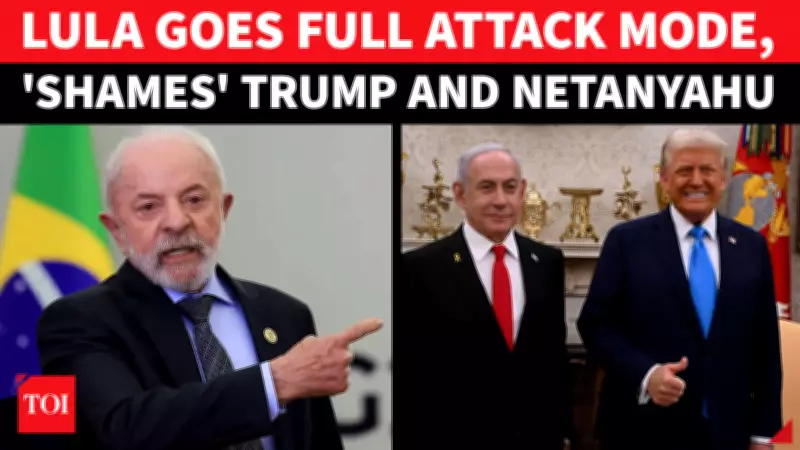
Brazilian President Lula Criticizes Major Powers at Barcelona Forum
Brazilian President Luiz Inácio Lula da Silva delivered a pointed critique of major world powers during his address at the International Global Progressive Mobilisation forum in Barcelona. The speech, which took place on April 19, 2026, saw Lula calling for a renewed focus on global peace and stability.
Lula's Call for UN Security Council Action
In his remarks, President Lula specifically urged the permanent members of the United Nations Security Council to prioritize diplomatic solutions over military interventions. He emphasized that current actions by these powers risk exacerbating global tensions rather than resolving them.
Lula questioned recent military engagements and highlighted ongoing conflicts in several regions, including Gaza, Lebanon, and Iran. He argued that these interventions often deepen divisions and create more instability.

Critique of Global Power Structures
The Brazilian leader also took aim at the existing structure of global governance. He contended that the current policies and roles of dominant world powers are pushing the international community toward what he described as "renewed Cold War-style divisions."
Lula's criticism extended to specific nations, with clear references to the United States and Israel. He suggested that their actions in various conflict zones are contributing to a dangerous escalation of hostilities.
Emphasis on Peaceful Resolution
Throughout his speech, Lula maintained that the path to global stability lies in dialogue and cooperation rather than confrontation. He called on all nations, particularly those with significant influence, to work toward de-escalation and peaceful conflict resolution.
The forum in Barcelona provided a platform for progressive voices from around the world to discuss alternative approaches to international relations. Lula's participation underscored Brazil's growing role in advocating for multilateralism and diplomatic engagement on the global stage.
This address comes at a time of heightened tensions in multiple regions, making Lula's message particularly relevant to current geopolitical discussions. His critique reflects broader concerns about the direction of international affairs and the need for more inclusive global governance structures.






