

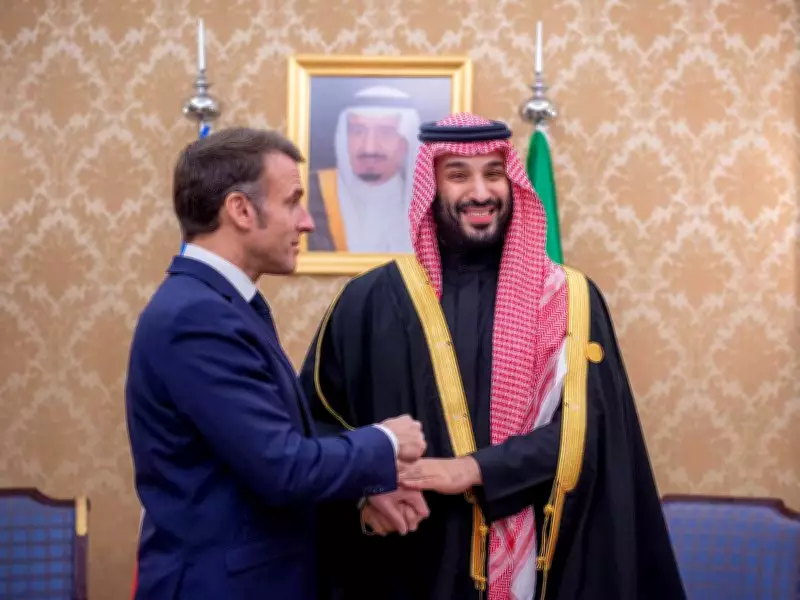
Macron and Saudi Crown Prince Unite on Strait of Hormuz Navigation Rights During Islamabad Summit
In a significant diplomatic development, French President Emmanuel Macron and Saudi Crown Prince Mohammed bin Salman have issued a strong joint call for the preservation of freedom of navigation in the strategically vital Strait of Hormuz. This appeal was made public amidst their participation in high-stakes talks held in Islamabad, Pakistan, highlighting the growing international focus on maritime security in this key global chokepoint.
High-Level Discussions in Islamabad Address Critical Maritime Corridor
The leaders underscored the Strait of Hormuz's paramount importance to global energy supplies and international trade, with approximately one-fifth of the world's oil passing through its narrow waters. Their statement, released during the Islamabad meetings, stressed that unimpeded maritime transit is essential for regional stability and economic prosperity. The talks, which brought together key Western and Middle Eastern figures, are seen as part of broader efforts to de-escalate tensions and ensure safe passage for commercial vessels in the Persian Gulf region.
Regional Security and Diplomatic Coordination in Focus
Analysts note that this joint declaration by Macron and the Saudi Crown Prince signals a coordinated approach to addressing security challenges in the Middle East. The Strait of Hormuz has been a flashpoint in recent years, with incidents involving tankers and geopolitical rivalries threatening to disrupt this crucial artery. The Islamabad forum provided a platform for reinforcing international norms and collaborative mechanisms to protect navigation rights, with both leaders advocating for dialogue and adherence to international law to prevent conflicts.

The emphasis on freedom of navigation comes at a time of heightened regional scrutiny, as global powers seek to balance energy security with diplomatic engagements. This move is expected to influence ongoing negotiations and security frameworks in the area, potentially shaping future policies aimed at safeguarding maritime routes. The involvement of Pakistan as the host nation adds a layer of regional diplomacy, linking South Asian interests with Middle Eastern stability concerns.
Key points from the discussions include:
- A reaffirmation of the principle of freedom of navigation as a cornerstone of international maritime law.
- Commitments to enhance multilateral cooperation to monitor and secure the Strait of Hormuz.
- Discussions on economic implications, ensuring that trade flows remain uninterrupted for global markets.
- Exploration of diplomatic channels to address underlying tensions that could threaten navigation safety.
This development underscores the interconnected nature of global security and economic interests, with the Strait of Hormuz serving as a litmus test for international cooperation in volatile regions.






