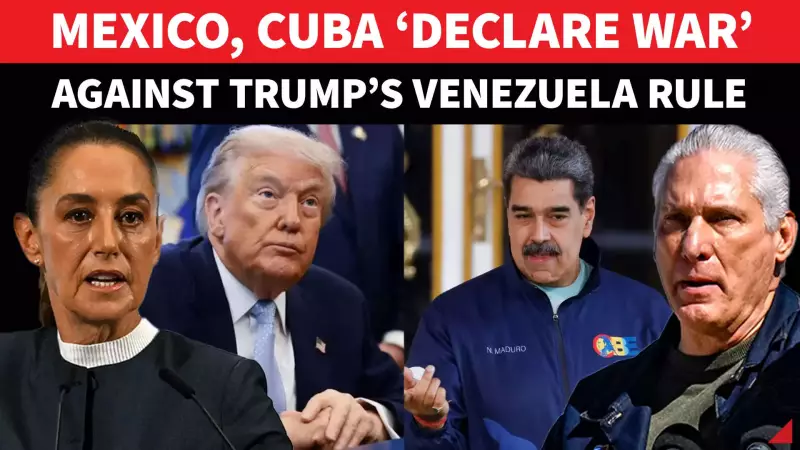
In a dramatic session at the United Nations Security Council (UNSC), the diplomatic rift between the United States and several Latin American nations has widened sharply. Mexico and Cuba delivered scathing critiques of Washington's recent moves against Venezuela, framing them as a dangerous return to imperialist policies and a blatant assault on national sovereignty.
Blistering Condemnation at the UN Podium
The confrontation unfolded on January 6, 2026, turning the international forum into a flashpoint of geopolitical fury. The Mexican envoy to the UN took a firm stand, explicitly rejecting any form of external regime change in Venezuela. The representative argued that such actions violate the core principles of international law and set a perilous precedent for global order.
Cuba's condemnation was even more severe. Its officials branded the United States' actions under the Trump administration as a 'criminal and cowardly assault' on Venezuela's sovereignty. The language pointed to a deep-seated anger and a perception that Washington was overstepping its bounds, acting unilaterally against a sovereign nation.

A Rallying Cry for the Global South
The strong statements from Mexico and Cuba did not occur in isolation. They acted as a catalyst, sparking widespread outrage and rallying support from numerous nations across the Global South. The Security Council chamber became a stage for mounting defiance against what many delegates viewed as aggressive US foreign policy.
This collective opposition highlights a significant geopolitical shift. Nations are increasingly banding together to challenge traditional power dynamics, signaling a new phase of global confrontation where unilateral actions are met with coordinated diplomatic resistance. The event underscored growing alarm over the potential for escalated conflict in the region.
Implications and the Road Ahead
The fierce diplomatic exchange marks a significant escalation in the long-standing Venezuela crisis. By framing the US actions as 'imperialist aggression,' Mexico and Cuba have elevated the rhetoric, making a peaceful resolution more complex. The rallying of Global South nations suggests the formation of a formidable bloc that could stymie future US-led initiatives at the UN and other international bodies.
This incident is more than a bilateral dispute; it is a symptom of a fragmented world order. The defiance shown at the UNSC indicates that the principles of sovereignty and non-interference remain potent rallying cries, capable of uniting diverse nations against a common perceived threat. The aftermath of this confrontation will likely influence diplomatic strategies for all involved parties in the days to come.