

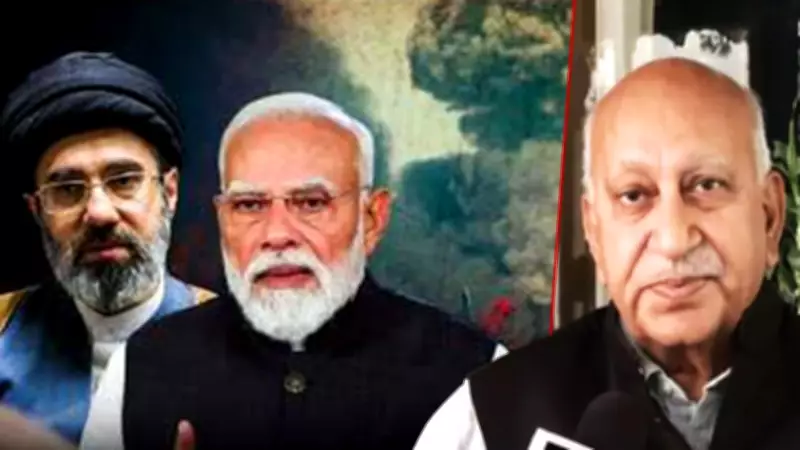
MJ Akbar's Stark Warning: West Asia Conflict Ushers in Chaotic Global Era
Amid the escalating Gulf war crisis, former Minister of State for External Affairs MJ Akbar has delivered a sobering analysis, asserting that the ongoing conflict signals the emergence of a new world order characterized by profound chaos and rapidly shifting power dynamics. His comments come as tensions in the region continue to destabilize international relations and security frameworks.
Drawing Parallels with Historical Upheavals
Akbar drew a compelling parallel between the current situation and the aftermath of World War II, which ultimately led to the creation of the United Nations. He noted that global systems and institutions often undergo significant evolution following periods of intense and widespread conflict. "History shows us that major geopolitical transformations frequently arise from the ashes of turmoil," Akbar remarked, emphasizing that the present crisis could similarly reshape international norms and alliances.
Erosion of Sovereignty and Rising Insecurity
The former diplomat issued a grave warning about the erosion of national sovereignty and the increasing prevalence of cross-border interventions, which he argued have rendered the world more unpredictable and insecure. "No one is safe now," Akbar stated bluntly, highlighting how traditional boundaries and protections are being undermined by new forms of aggression and diplomatic maneuvering. This environment, he suggested, creates a volatile landscape where stability is increasingly elusive.

India's Strategic Position in the Evolving Order
Despite the bleak outlook, Akbar expressed confidence in India's potential to play a pivotal role in the years ahead. He stressed that no single country can unilaterally shape the future global order, but added that India is exceptionally well-placed to be among the key partners influencing this evolution. "India's strategic autonomy, economic growth, and diplomatic outreach position it as a crucial actor in navigating these turbulent times," he explained, suggesting that the nation could help steer the world toward a more balanced and cooperative framework.
Akbar's insights underscore a critical juncture in international affairs, where the Gulf war crisis may serve as a catalyst for redefining global power structures. His analysis calls for heightened vigilance and collaborative efforts to address the mounting challenges of sovereignty erosion and cross-border instability.






