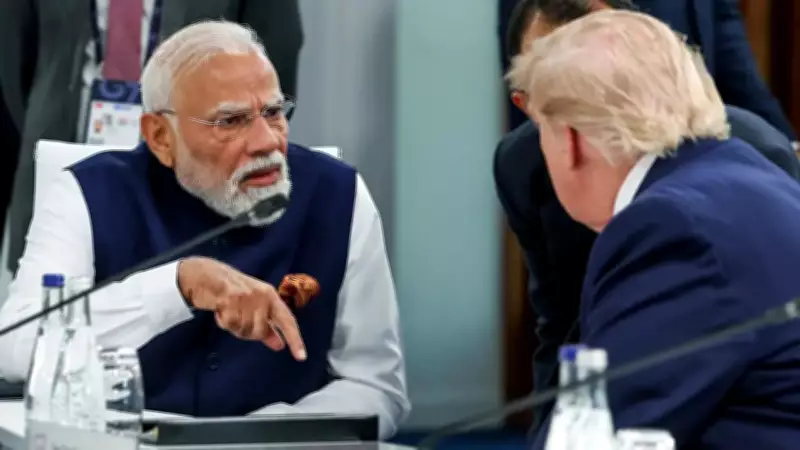
Prime Minister Narendra Modi, addressing an outreach session at the G7 summit in France, declared that the world suffers from a shortage of trust, not resources, and that mutual trust is the most important strategic asset today. Seated next to US President Donald Trump, he emphasized the need to keep sea lanes safe and allow seafarers to perform their duties without fear, in an apparent reference to the killing of three Indian sailors by US forces.
Protecting Seafarers and Maritime Trade
"It is our responsibility to protect seafarers who connect all countries through maritime trade," the Prime Minister said. He welcomed progress in Iran-US talks, noting that the conflict had caused loss of life and property in friendly West Asian countries, damaged the global economy, and led to the deaths of many Indian civilians.
International Law and Solidarity
Modi stressed that a lack of respect for international law is the biggest hurdle to building international solidarity and must be addressed. He called for international partnerships to prioritize dialogue and diplomacy, linked to dignity rather than dependency. In an uncertain world, trade and technology are being misused for narrow interests, leading to a trust deficit in the international arena.

"The future of our partnerships depends on rebuilding this trust," Modi said, participating in the session on forging new partnerships and rebuilding international solidarity. He underlined that in an interconnected world where energy, food, health, cyber, and economic security are intertwined, building international partnerships is a necessity for humanity's progress and prosperity.
Moving Beyond Donor-Recipient Mindset
Modi called upon the world to move from a donor-recipient mindset to partnerships based on solidarity and equality, saying the Global South has immense expectations from the world. "More than support, it seeks partnership. We must move beyond the donor-recipient mindset and work as equal partners. We must walk together and not merely alongside one another," he said.
"India believes that the true test of partnership is not what we build for others, but what we enable others to build for themselves. Our development partnerships reflect the same spirit," he added.
India's Approach to International Cooperation
This was the first outreach session that Modi and other invited leaders participated in. Earlier, French President Emmanuel Macron welcomed G7 and invited leaders at the summit venue in Evian-les-Bains. An Indian readout of Modi's speech stated: "Sharing India’s approach to international cooperation, PM said India has always followed the principle of humanity first, and this thought continues to be at the centre of its efforts, be it pursuing action under International Solar Alliance, Coalition for Disaster Resilient Infrastructure, Global Bio-fuel Alliance, Mission LiFE or Ek Ped Maa ke Naam campaign."
This inclusive approach has also led India to be the first responder when natural disasters strike various parts of the world, whether a cyclone in Sri Lanka, earthquake in Afghanistan, floods in Mozambique, or hurricane in Jamaica.