

Prime Minister Modi Engages Global Leaders to Address West Asia Tensions
In a series of high-level diplomatic engagements, Prime Minister Narendra Modi has spoken with the leaders of Qatar, Oman, Jordan, France, and Malaysia to underscore the critical necessity for de-escalation and a return to dialogue and diplomacy in the volatile West Asia region. These conversations come amid escalating tensions that threaten regional stability and global energy security.
Solidarity with Qatar and Condemnation of Attacks
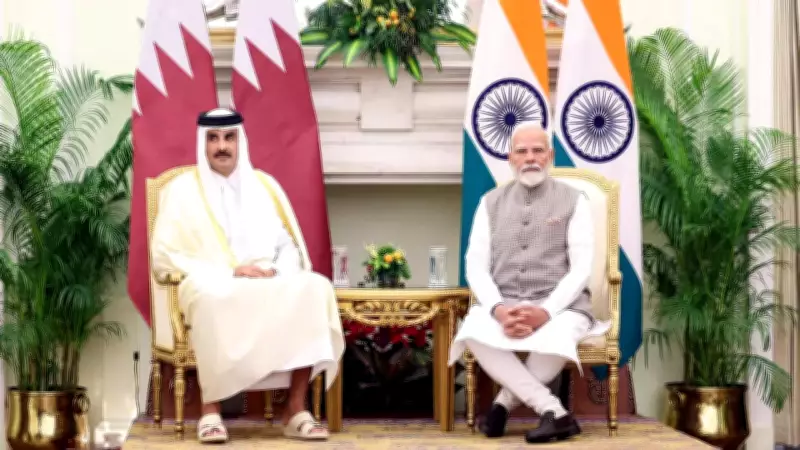
Following his discussion with Qatar's Amir Tamim bin Hamad Al Thani, Prime Minister Modi expressed India's firm solidarity with Doha. He strongly condemned the recent attacks targeting energy infrastructure in the region. The Prime Minister emphasized the paramount importance of maintaining free and secure navigation through the strategically vital Strait of Hormuz, a crucial maritime chokepoint for global energy supplies.
Qatar holds significant importance for India's energy portfolio, serving as the largest supplier of Liquefied Natural Gas (LNG), accounting for over 40% of India's total LNG imports. The Ministry of External Affairs (MEA) indicated that the recent attacks are impacting gas imports, which are essential for piped supply networks across the country.

Discussions with Jordan and Regional Energy Concerns
In his talks with Jordan's King Abdullah II, Prime Minister Modi labeled the assaults on energy installations in West Asia as condemnable acts that could precipitate unnecessary escalation. While not explicitly naming Israel or Iran, the Prime Minister highlighted the shared stance of India and Jordan in supporting the unhindered transit of goods and energy resources.
The Indian government separately declared that such attacks on energy facilities are completely unacceptable and must cease immediately. Officials recalled India's previous appeals to avoid targeting civilian infrastructure, including energy assets, across the region.
"Recent attacks against energy installations in different locations across this region are therefore deeply disturbing and only serve to further destabilise an already uncertain energy scenario for the whole world," stated MEA spokesperson Randhir Jaiswal.
Engagements with Oman, France, and Malaysia
After previously conversing with leaders from the UAE and Kuwait, Prime Minister Modi also held discussions with Oman's Sultan Haitham bin Tariq. He reiterated India's condemnation of violations against Oman's sovereignty and territorial integrity, while appreciating Oman's efforts in facilitating the safe return of thousands of individuals, including Indian nationals.
Oman is another key partner for India, being a significant source of both LNG and crude petroleum oil. The leaders agreed on the imperative to prioritize dialogue and diplomacy to achieve de-escalation and subsequently restore peace and stability. Both nations affirmed their commitment to ensuring safe and free navigation through the Strait of Hormuz.
Following a conversation with French President Emmanuel Macron, Prime Minister Modi noted that both leaders would continue their close coordination to advance peace and stability in the region and beyond. In his discussion with Malaysian Prime Minister Anwar Ibrahim, Modi stressed the urgent need for de-escalation. Concurrently, External Affairs Minister S. Jaishankar met with UAE Minister of State for International Cooperation, Reem Al Hashimy, to deliberate on developments in the ongoing conflict.
Impact on LNG Supply and Strategic Discussions
Addressing the direct impact on energy supplies, MEA spokesperson Randhir Jaiswal confirmed that LNG imports have been affected due to the closure of the Strait of Hormuz. "And it has been impacted because of the closure of the Strait of Hormuz. But we are in discussions with several countries," he stated, indicating ongoing diplomatic efforts to mitigate supply disruptions and secure alternative arrangements.
These comprehensive diplomatic initiatives underscore India's proactive role in advocating for peaceful resolution, safeguarding its critical energy interests, and contributing to global stability amidst heightened regional tensions.






