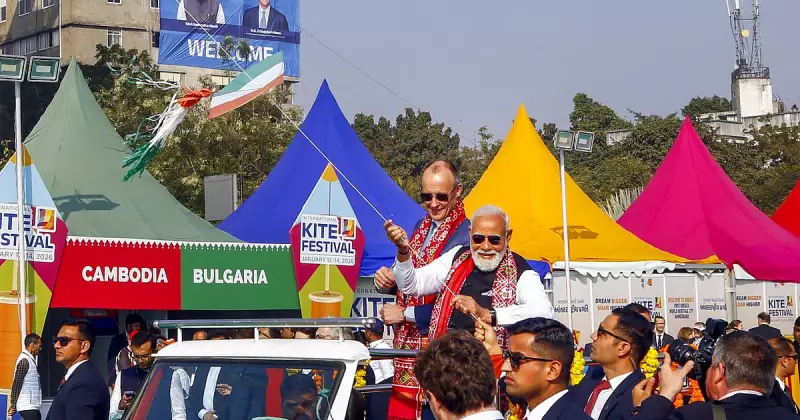
In a vibrant display of cultural diplomacy, Prime Minister Narendra Modi and visiting German Chancellor Friedrich Merz engaged in a traditional kite-flying session on Monday evening. The unique interaction took place at the iconic Sabarmati Riverfront in Ahmedabad, Gujarat, setting a warm and informal tone for their official discussions.
A Symbolic Gesture on the Sabarmati
The event was held on January 29, 2024, as Chancellor Merz began his two-day official visit to India. After arriving in Ahmedabad, Merz was welcomed by Prime Minister Modi, who personally guided him through the experience of flying a kite, a beloved pastime deeply associated with Gujarat and the festival of Uttarayan. The leaders were seen maneuvering kites against the backdrop of the beautifully developed riverfront, a project often showcased as a model of urban transformation.
This was not merely a recreational activity but a significant diplomatic gesture. By introducing the German leader to this quintessential Gujarati tradition, PM Modi offered a personal touch to bilateral relations, fostering a connection beyond formal dialogue. The Sabarmati Riverfront itself stands as a symbol of Ahmedabad's modernization and was a fitting venue for blending tradition with contemporary India's aspirations.

Strengthening India-Germany Ties
The kite-flying session preceded the delegation-level talks scheduled between the two leaders. It underscored the importance both nations place on building a strong personal rapport to complement strategic and economic partnerships. Germany is a key trade partner and a vital source of technology and investment for India.
Observers noted that such informal engagements are a hallmark of PM Modi's diplomatic outreach, often used to create memorable moments that strengthen interpersonal bonds with global leaders. The imagery of the two statesmen flying kites is expected to resonate positively, projecting a picture of collaborative and friendly relations between India and Germany.
The Road Ahead for Bilateral Cooperation
Following the cultural interlude, PM Modi and Chancellor Merz proceeded to hold official talks focused on deepening the strategic partnership. Key areas on the agenda included:
- Enhancing trade and investment flows between the two economies.
- Collaboration in green energy and sustainable technologies, critical for climate goals.
- Defense and security cooperation.
- People-to-people ties and mobility agreements.
The visit by Chancellor Merz, who leads the Christian Democratic Union (CDU), is seen as a crucial step in engaging with India's leadership amidst a evolving global order. The informal start at the Sabarmati Riverfront, therefore, served as a powerful prelude to substantive discussions aimed at forging a forward-looking alliance for the coming years.