

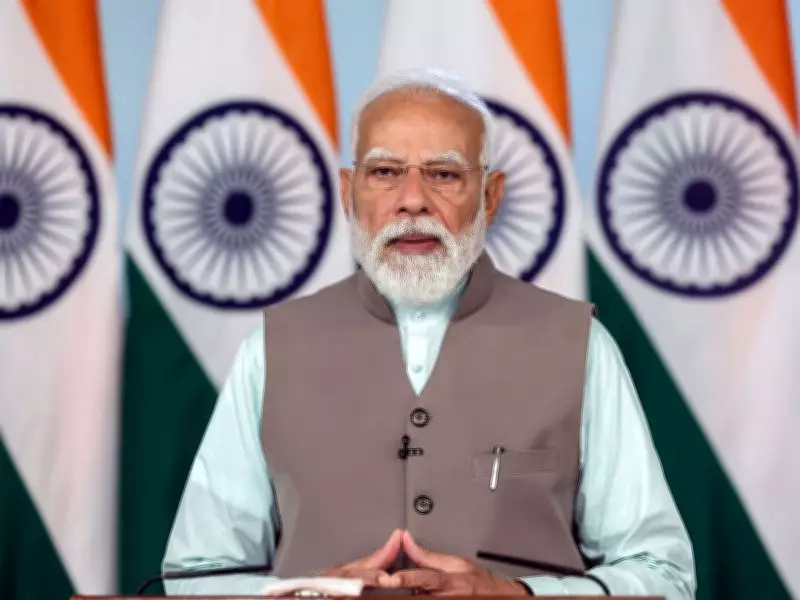
PM Modi Extends Congratulations to Nepal's Rastriya Swatantra Party After Election Landslide
In a significant diplomatic gesture, Prime Minister Narendra Modi of India has personally reached out to the leaders of Nepal's Rastriya Swatantra Party (RSP) following their impressive performance in the recent parliamentary elections. The Prime Minister held separate telephone conversations with Balendra Shah and Rabi Lamichhane, the prominent figures behind the party's unexpected surge, to convey his heartfelt congratulations on their electoral success.
A New Political Force Emerges in Nepal
The Rastriya Swatantra Party, a relatively new entrant in Nepal's political landscape, has made a remarkable impact by securing a substantial number of seats in the latest polls. This outcome marks a notable shift in the country's political dynamics, challenging the dominance of established parties. The party's platform, which emphasizes anti-corruption measures, economic reforms, and national sovereignty, appears to have resonated strongly with Nepalese voters, particularly the youth and urban populations.
Prime Minister Modi's outreach underscores India's keen interest in fostering stable and friendly relations with its neighboring countries. By acknowledging the RSP's achievement, Modi is not only recognizing the democratic will of the Nepalese people but also signaling India's support for Nepal's political evolution and development. This move is seen as part of India's broader Neighbourhood First policy, which prioritizes engagement with South Asian nations.

Key Figures in the RSP's Success
Balendra Shah, a popular rapper and social activist, and Rabi Lamichhane, a former television journalist, have been instrumental in galvanizing support for the Rastriya Swatantra Party. Their backgrounds outside traditional politics have allowed them to connect with a disillusioned electorate seeking change. During the calls, Prime Minister Modi reportedly praised their leadership and the party's vision, expressing optimism about future collaborations between India and Nepal under the new political framework.
The conversations also touched upon bilateral issues, with Modi reaffirming India's commitment to strengthening ties with Nepal across various sectors, including trade, infrastructure, and cultural exchanges. This diplomatic engagement is expected to pave the way for enhanced cooperation, as both nations navigate regional challenges and opportunities.
Implications for India-Nepal Relations
The RSP's rise could have significant implications for India-Nepal relations, which have experienced fluctuations in recent years. With a party that advocates for balanced foreign policy and economic independence, India may find a pragmatic partner in Kathmandu. Modi's proactive congratulation is a strategic step to build rapport with the emerging leadership, ensuring that bilateral ties remain robust and mutually beneficial.
As Nepal embarks on this new political chapter, the international community, including India, will be closely watching how the Rastriya Swatantra Party implements its agenda. Prime Minister Modi's gesture of goodwill sets a positive tone for future dialogues, highlighting the importance of democratic processes and regional solidarity in South Asia.






