

In a significant diplomatic gesture, Prime Minister Narendra Modi has expressed deep concern over the rapidly deteriorating health of former Bangladesh Prime Minister Begum Khaleda Zia and offered India's full assistance for her medical treatment. This move comes at a critical juncture in Bangladesh's domestic politics, with national elections scheduled for early next year.
A Critical Health Situation and an Immediate Response
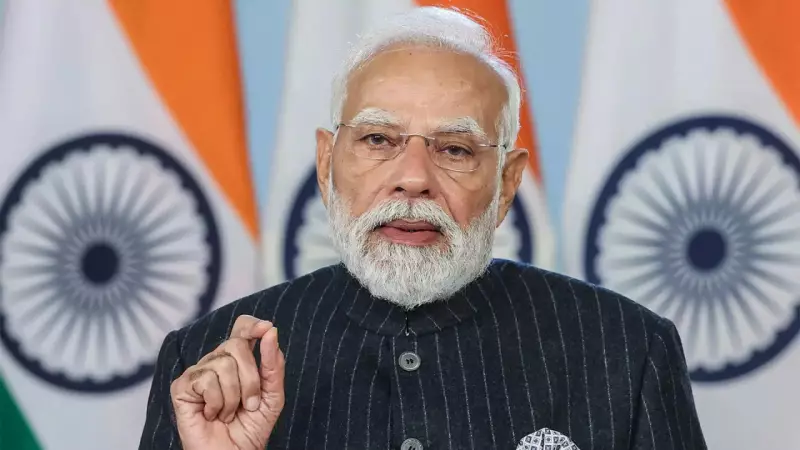
With reports indicating that Khaleda Zia is in a very critical condition, Prime Minister Modi took to social media platform X to convey his message. "Deeply concerned to learn about the health of Begum Khaleda Zia, who has contributed to Bangladesh's public life for many years," Modi stated. He added, "Our sincere prayers and best wishes for her speedy recovery. India stands ready to extend all possible support, in whatever way we can."
The timing of this outreach is particularly notable. A team of doctors from China reportedly arrived in Dhaka on Monday to assist in Zia's treatment, highlighting the international attention on her health. Modi's offer positions India as a ready and willing partner in her care.

Navigating Complex Political History
PM Modi's gesture carries substantial political weight due to the historically complex relationship between India and Khaleda Zia's party, the Bangladesh Nationalist Party (BNP). For decades, the BNP has maintained a more distant and often critical stance towards New Delhi, especially when compared to the warm ties enjoyed by its rival, Prime Minister Sheikh Hasina, and her Awami League.
The BNP has previously accused the Indian government of undermining democracy in Bangladesh by supporting Hasina's administration, which it labels as "authoritarian." This context makes Modi's public offer of support a marked departure from past diplomatic postures and signals a potential recalibration of India's approach.
India's Strategic Re-evaluation Ahead of Polls
Analysts view this outreach as a pragmatic acknowledgment of Bangladesh's evolving political reality. With general elections looming early next year, the political landscape appears fluid. A recent local survey, cited by the prominent Bengali daily Prothom Alo, suggests a tight race is developing.
The survey indicates the BNP is currently in a close contest with the Jamaat-e-Islami, holding a slight three-point lead. The political turmoil following Sheikh Hasina's brief ouster last year, which forced her to flee to India, is expected to significantly benefit the BNP's prospects.
This is not the first time PM Modi has engaged with Zia; he held a meeting with her during his 2015 visit to Dhaka, which was described as a "full spectrum outreach." His latest message reinforces India's stated commitment to "fair and inclusive polls" in Bangladesh. It underscores a policy of engaging with all stakeholders to ensure peace, democracy, and stability in its crucial neighbour.
A Forward-Looking Diplomatic Posture
By extending support during a personal health crisis, India is doubling down on its position of prioritizing Bangladesh's long-term interests. The move is designed to communicate that India's foreign policy is driven by state interests and regional stability, transcending individual political alignments.
For its part, the BNP has also indicated a desire for "balanced and respectful" relations with India. PM Modi's proactive offer, therefore, opens a window for more constructive engagement regardless of the electoral outcome, ensuring that India remains a key partner in Bangladesh's future trajectory.






