

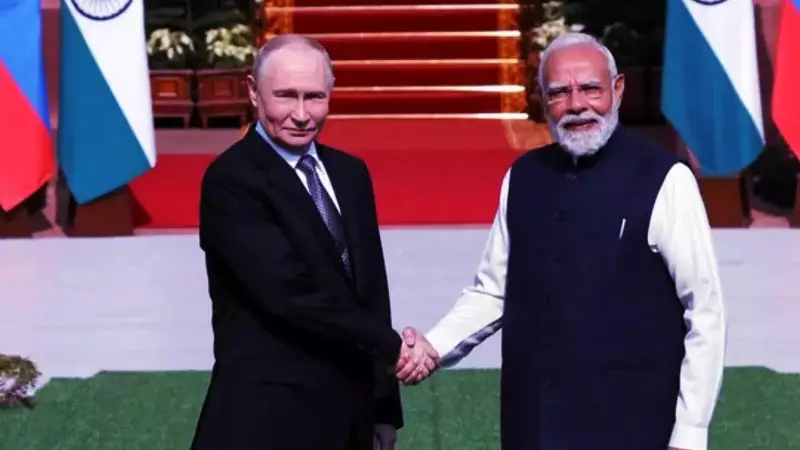
Prime Minister Narendra Modi delivered a clear message to Russian President Vladimir Putin during their high-profile summit in New Delhi, stating that the welfare of the world lies in the path to peace. The international community watched closely as the two leaders met, with many hoping India would urge Russia towards an early resolution to the conflict in Ukraine.
India's Stance: On the Side of Peace, Not Neutrality
In his televised opening remarks, Prime Minister Modi was unequivocal about India's position. He reiterated that India is not neutral but stands firmly on the side of peace. He expressed support for all recent efforts to end the war and expressed confidence that ongoing diplomatic initiatives would soon steer the world towards peace and progress.
"We support every effort for peace and we stand shoulder to shoulder with every effort for peace," Modi said. He highlighted the global crises, from the pandemic onwards, and expressed hope for relief and a new direction for the international community. He affirmed India's continued readiness to contribute to peace-building efforts.

Putin's Response and Western Apprehensions
President Vladimir Putin thanked PM Modi for India's efforts to seek a solution. He revealed that he had discussed the Ukraine issue at length with Modi during a private dinner hosted on Thursday. Putin briefed the Indian leader on ongoing efforts, including engagements with the United States, aimed at a peaceful settlement of the crisis.
The summit took place amid visible unease in Western capitals over India hosting Putin, even under the established annual summit mechanism. Analysts suggest that the absence of major new announcements in sensitive areas like defence, coupled with Modi's strong peace message, is likely intended to soothe frayed nerves in the West.
This diplomatic balancing act is crucial for India, which is in advanced stages of negotiating a free trade agreement (FTA) with both the United States and the European Union. The US has recently imposed tariffs related to India's oil trade with Russia, adding complexity to the talks.
Implications for India's Strategic Partnerships
The European Union, in particular, has been closely monitoring Putin's visit, concerned it might impact the crucial FTA negotiations. Both sides aim to conclude the talks in the coming weeks to pave the way for a successful India-EU summit scheduled for January 27. Key sticking points remain, including the EU's carbon tax and its demand for a commitment to the Paris Agreement within the trade pact.
However, experts believe the summit's outcomes, which focused on economic cooperation, healthcare, migration, and media, are unlikely to derail the FTA process. Modi's peace plea also follows India's decision earlier this week to abstain from a UN General Assembly vote on a resolution concerning Ukrainian children, underscoring its nuanced diplomatic approach.
The trust between the two leaders was evident, with Modi attributing their frank exchanges on Ukraine to the strength of their relationship. As global dynamics shift, India's dialogue with Russia, while advocating for a collective path to peace, highlights its commitment to strategic autonomy and its role as a potential bridge in international diplomacy.






