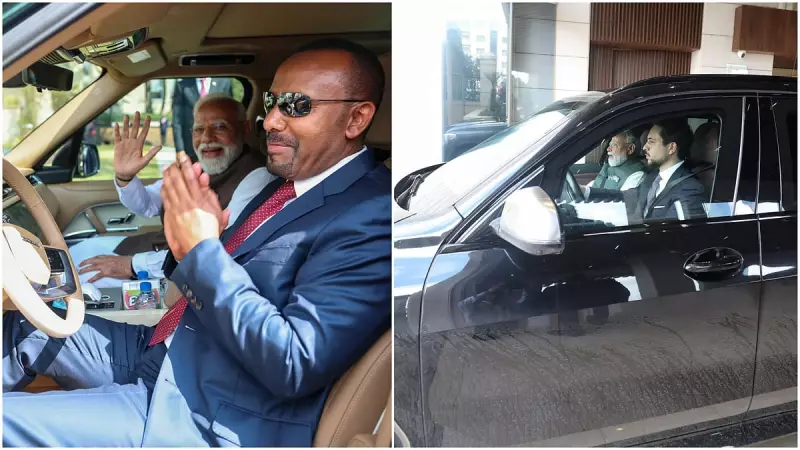
Prime Minister Narendra Modi has once again showcased his distinctive style of personal diplomacy, moving key conversations from conference rooms to the more intimate setting of a car. This approach, often termed 'car diplomacy', was highlighted in a series of engagements with prominent international figures, including Russian President Vladimir Putin, Jordan's Crown Prince Al-Hussein bin Abdullah II, and Ethiopian Prime Minister Dr. Abiy Ahmed Ali.
More Than Just a Ride: The Essence of Car Diplomacy
For Prime Minister Modi, these shared car journeys are far more than mere transportation between venues. They represent a deliberate diplomatic tool aimed at building a foundation of personal trust and friendship with his counterparts. The confined, private space of a vehicle allows for candid, off-the-record conversations that are often impossible in structured meetings surrounded by aides and officials. This method implies a significant level of comfort and confidence between the leaders, setting a positive tone for the broader bilateral discussions that follow.
The practice underscores a belief that strong personal rapport between heads of state can significantly smooth the path for resolving complex state-to-state issues. It transforms a formal state interaction into a more human connection.

A Glimpse into the High-Profile Conversations
The recent instances of this diplomacy involved some of the world's most watched leaders. The interaction with Russian President Vladimir Putin is particularly notable, given the current global geopolitical landscape. A car ride between the two leaders provides a rare opportunity for direct, unfiltered dialogue on sensitive matters like defense cooperation, energy security, and the Ukraine conflict.
Similarly, the engagement with His Royal Highness Crown Prince Al-Hussein bin Abdullah II of Jordan points to India's deepening ties with West Asia. Such one-on-one time can facilitate discussions on regional stability, counter-terrorism, and economic partnerships, strengthening a relationship with a key moderate voice in the Arab world.
The meeting with Ethiopian Prime Minister Dr. Abiy Ahmed Ali highlights India's focus on Africa. As a major economy and a strategic partner in the Horn of Africa, Ethiopia is crucial for India's 'Africa outreach'. A personal conversation with PM Abiy can accelerate collaboration in infrastructure, technology, and agricultural development.
Strategic Implications for India's Foreign Policy
Prime Minister Modi's consistent use of this personal touch in diplomacy has several strategic implications. Firstly, it helps in de-escalating tensions and finding common ground on thorny issues through private assurance. Secondly, it creates memorable moments that define a bilateral relationship, often generating positive media coverage and public goodwill in both countries.
This style aligns with a broader trend in Modi's foreign policy, which emphasizes direct leader-to-leader connections as a catalyst for broader institutional and economic engagement. By investing in personal relationships, India aims to ensure that its voice is heard clearly and that its partnerships are resilient amidst international uncertainties.
The reports of these diplomatic rides, shared via the Prime Minister's official social media channels on 17 December 2025, serve to communicate to domestic and international audiences that India is actively and personally managing its key global relationships. In an era of complex multilateral diplomacy, Narendra Modi's car journeys remind us that at the heart of international relations, the human element remains irreplaceable.