

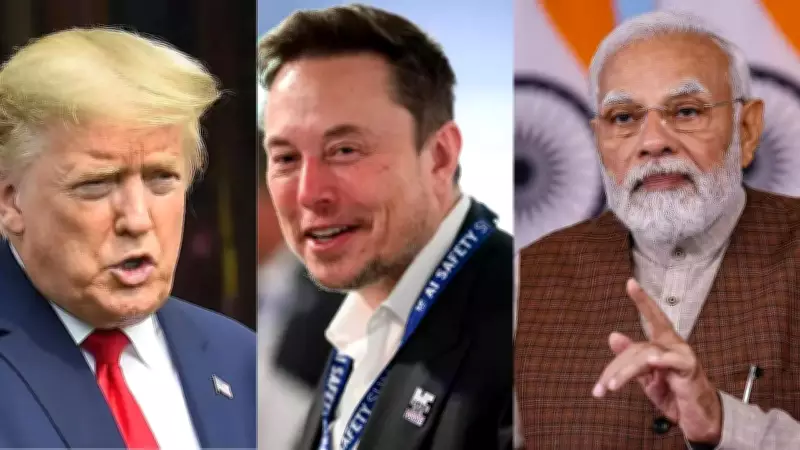
Elon Musk Joins High-Level Modi-Trump Discussion on Middle East Crisis
In an unprecedented diplomatic development, billionaire entrepreneur Elon Musk participated in a phone call on Tuesday between Prime Minister Narendra Modi and United States President Donald Trump. This marks a highly unusual instance where a private citizen joined a direct discussion between two heads of state during an ongoing geopolitical crisis, as reported by the New York Times.
Musk's Inclusion Signals Improved Ties with Trump Administration
The inclusion of Musk, which has been confirmed by multiple US officials, comes several months after a reported fallout between the tech mogul and President Trump following Musk's exit from a government advisory role. Recent developments strongly suggest that relations between the two influential figures have significantly improved, paving the way for this extraordinary diplomatic participation.
However, critical questions remain unanswered regarding Musk's precise role during the conversation. It remains unclear why exactly Musk was included in this high-level call or whether he actively contributed to the discussion. His extensive business interests include substantial investments linked to Middle Eastern sovereign wealth funds, and he has been actively seeking expanded commercial opportunities within India's growing market.

Focus on Strait of Hormuz Security and Regional De-escalation
The conversation primarily focused on the rapidly evolving security situation in West Asia, with both leaders emphasizing the paramount importance of keeping the Strait of Hormuz open, secure, and fully accessible to international shipping. This critical maritime corridor handles approximately one-fifth of global oil shipments and remains absolutely vital to international energy markets and economic stability worldwide.
US Ambassador to India Sergio Gor confirmed that the leaders engaged in detailed discussions about regional tensions and the strategic necessity of ensuring uninterrupted commercial movement through this crucial waterway. In a subsequent post on social media platform X, Prime Minister Modi stated that India firmly supports de-escalation and the early restoration of peace in the region.
According to the official Indian readout of the call, Modi highlighted that safe and secure passage through the Strait of Hormuz is fundamentally vital for global economic well-being. Both sides agreed to maintain close contact regarding ongoing efforts toward achieving regional stability and preventing further escalation of hostilities.
Broader Diplomatic Context and Indian Engagement
The high-level call occurred just one day after President Trump announced a five-day pause on potential US military strikes against Iranian facilities, raising cautious hopes for easing hostilities in the region. It also coincided with emerging reports that Washington might dispatch Vice President JD Vance to Pakistan for crucial talks with Iranian officials regarding the ongoing crisis.
Separately, External Affairs Minister S. Jaishankar held substantive discussions with US Secretary of State Marco Rubio, addressing the conflict's profound implications for global energy markets and India's own energy security requirements. India has maintained consistent communication with Iranian authorities to facilitate the safe movement of Indian vessels, some of which remain positioned near the Strait despite recent passage granted to other ships.
Jaishankar also met directly with Iran's Ambassador to India, Mohammad Fathali, conveying India's serious concerns about regional stability while simultaneously thanking Tehran for its continued support to Indian nationals residing in Iran. The Indian government has not issued an official response to President Trump's decision to delay potential military action against Iranian energy installations.

Ministry of External Affairs spokesperson Randhir Jaiswal stated on Tuesday that both Prime Minister Modi and Minister Jaishankar are consistently emphasizing in all their diplomatic engagements that sustainable peace can only be restored through persistent dialogue and constructive diplomacy. Notably, like many of America's European allies, India has demonstrated limited interest in joining any US-led naval coalition specifically aimed at keeping the Strait of Hormuz open, preferring instead multilateral diplomatic approaches.





