

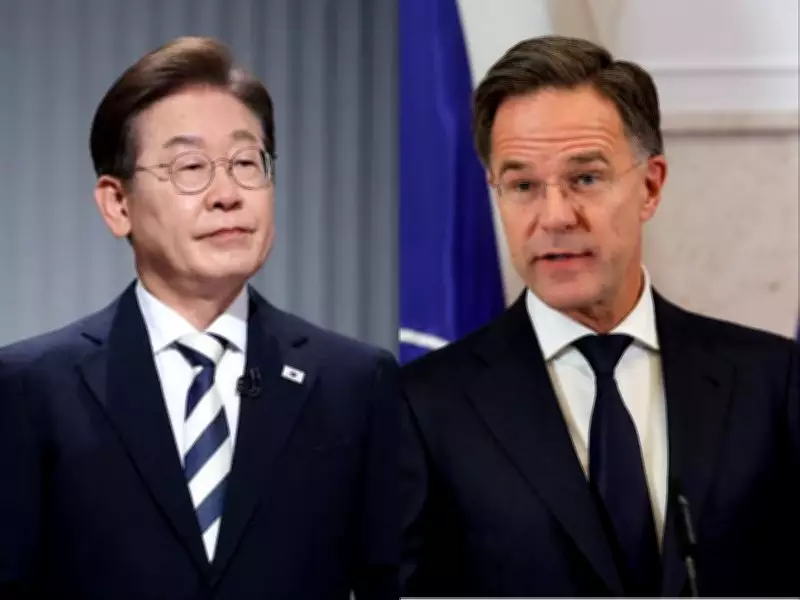
NATO Chief Mark Rutte Engages in High-Level Talks with South Korean President Lee Jae-myung
In a significant diplomatic engagement, NATO Secretary General Mark Rutte met with South Korean President Lee Jae-myung to discuss pressing global security issues. The talks focused on strengthening ties between the Euro-Atlantic alliance and a key Indo-Pacific partner, highlighting the growing importance of cross-regional cooperation in an increasingly volatile world.
Emphasis on Interconnected Security Frameworks
During the meeting, Rutte underscored the critical link between security in the Euro-Atlantic and Indo-Pacific regions. He emphasized that challenges such as geopolitical tensions, cyber threats, and maritime disputes are not confined to one area but have far-reaching implications that require a unified response. This perspective aligns with NATO's evolving strategy to address threats beyond its traditional boundaries, recognizing the interconnected nature of modern security landscapes.
Key points from the discussion included:

- Enhanced dialogue on shared security concerns, including North Korea's nuclear ambitions and regional stability.
- Collaboration on defense technologies and intelligence-sharing to bolster mutual preparedness.
- A commitment to upholding international norms and rules-based order in both regions.
Strategic Implications for Global Alliances
The talks reflect a broader trend of NATO expanding its partnerships in the Indo-Pacific, with South Korea emerging as a pivotal ally. President Lee Jae-myung expressed support for deeper engagement, noting that South Korea's security is intertwined with global stability. This meeting follows recent NATO outreach efforts to countries like Japan and Australia, signaling a strategic pivot to address challenges from state actors and non-traditional threats.
Analysts suggest that such interactions could lead to more formalized cooperation agreements, potentially including joint military exercises or policy coordination forums. The emphasis on linked security also comes amid rising tensions in hotspots like the South China Sea and Eastern Europe, where coordinated international responses are deemed essential.
Looking Ahead: Future Prospects for NATO-South Korea Relations
As the world grapples with complex security dynamics, the Rutte-Lee meeting sets a precedent for ongoing collaboration. Both leaders agreed to maintain regular consultations and explore areas for practical cooperation, such as cybersecurity and disaster response. This partnership not only enhances South Korea's defense capabilities but also strengthens NATO's role as a global security actor.
In conclusion, the dialogue between NATO Chief Mark Rutte and South Korean President Lee Jae-myung marks a proactive step toward addressing transnational security issues. By emphasizing the linkage between Euro-Atlantic and Indo-Pacific security, they pave the way for more resilient and adaptive international alliances in the face of evolving threats.






