

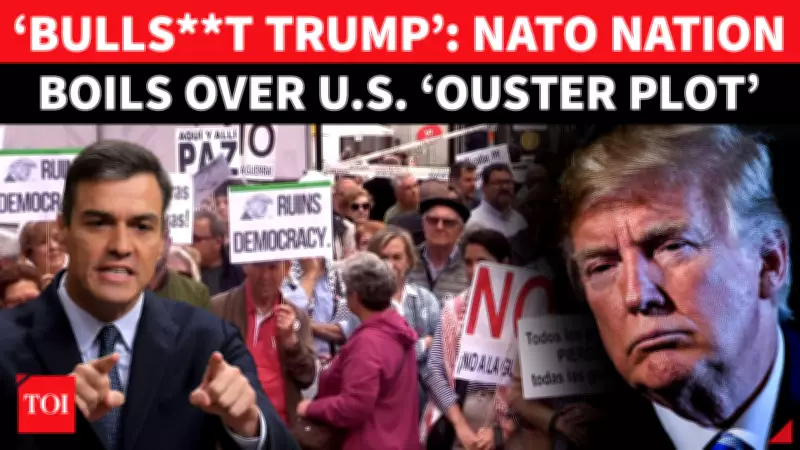
A political storm is unfolding within NATO as tensions between Spain and the United States spill onto the streets of Madrid. Hundreds of protesters gathered in the Spanish capital, chanting “No War” and voicing opposition to U.S. President Donald Trump and the ongoing conflict with Iran. The demonstrations also reflected growing support for Prime Minister Pedro Sánchez, who has refused to allow U.S. military operations linked to the war to use Spanish bases or airspace.
Leaked Pentagon Email Sparks Crisis
The protests come after reports of a leaked Pentagon email suggesting Spain could face consequences within NATO for not supporting U.S. actions. The email, purportedly from a senior Pentagon official, hinted at possible expulsion or suspension of Spain from the alliance. This has ignited a fierce debate across Europe about the limits of alliance solidarity and national sovereignty.
Spain's Stance on International Law
Sánchez dismissed the report, saying his government relies on official positions, not internal communications, and reaffirmed Spain’s commitment to international law. In a press conference, he stated, “Spain will not be coerced by unofficial threats. Our decisions are based on principles of peace and legality.” The Spanish foreign ministry also called for an explanation from NATO and the United States regarding the leaked email.

Growing Anti-War Sentiment
The demonstrations in Madrid are part of a broader wave of anti-war protests across Europe. Many Spaniards support Sánchez’s decision to keep the country out of the conflict, fearing escalation and regional instability. Protesters carried signs reading “No to NATO aggression” and “Spain for peace.” The atmosphere was tense but peaceful, with police maintaining a watchful presence.
Implications for NATO Unity
This incident highlights growing divisions within NATO over the war in Iran. While the United States expects full backing from allies, several member states have expressed reservations. Analysts warn that the leak could further strain transatlantic relations and weaken the alliance's cohesion. Some European diplomats have called for an emergency NATO meeting to address the fallout.
The situation remains fluid, with both Spanish and U.S. officials attempting to downplay the leak. However, the public outcry suggests that the issue will not fade quickly. As the protests continue, the world watches to see how NATO navigates this internal crisis.






