

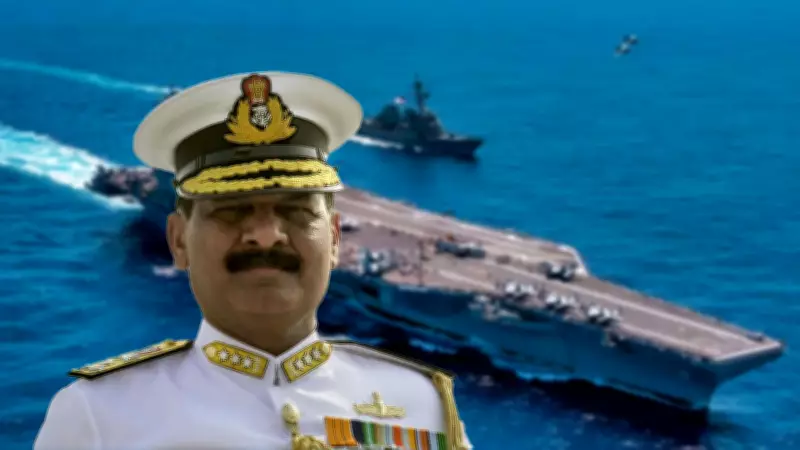
Navy Chief Tripathi Flags 'Severe Economic Impact' of Hormuz Disruption
Indian Navy Chief Admiral Dinesh K Tripathi has issued a stark warning about the escalating risks to global energy security and economic stability posed by disruptions in the Strait of Hormuz. Speaking against the backdrop of the prolonged West Asia conflict, he emphasized that maritime security dynamics are undergoing rapid and profound shifts, with far-reaching implications for international trade and regional stability.
Energy Instability and Wider Economic Uncertainty
The disruption of energy flows through the Strait of Hormuz is not merely a logistical challenge but a catalyst for broader economic turmoil, according to Tripathi. He pointed out that this critical chokepoint, through which a significant portion of the world's oil and gas passes, is becoming increasingly vulnerable due to geopolitical tensions. The resulting energy instability is creating ripple effects that extend beyond immediate supply concerns, fostering widespread economic uncertainty across the region and potentially impacting global markets.
Expanding Global Competition at Sea
Tripathi highlighted that the nature of global competition in maritime domains is evolving dramatically. It is no longer confined to traditional resources like oil; it now encompasses a fierce race for critical assets such as rare earth elements, essential minerals, and strategic data routes. This expansion underscores the growing importance of securing undersea cables and other infrastructure that form the backbone of the digital economy, making naval security more complex and multidimensional than ever before.

India's Commitment to Naval Partnerships
Addressing India's proactive stance, Tripathi elaborated on the IOS SAGAR initiative, which reflects the nation's dedication to enhancing naval cooperation and regional security. Foreign personnel are actively engaging in training exercises and sailing alongside Indian Navy crews, fostering greater coordination and interoperability. This collaborative approach aims to build robust partnerships that can collectively address emerging threats and ensure the safety of vital sea lanes, reinforcing India's role as a net security provider in the Indian Ocean Region.
Future Challenges and Strategic Imperatives
Looking ahead, Tripathi stressed the urgent need for adaptive strategies to navigate the evolving maritime landscape. The convergence of energy security, economic resilience, and technological advancements requires a holistic approach to naval preparedness. By strengthening alliances and investing in capabilities to protect critical resources, nations can mitigate the risks associated with disruptions like those in the Strait of Hormuz, safeguarding both regional and global interests in an increasingly interconnected world.






