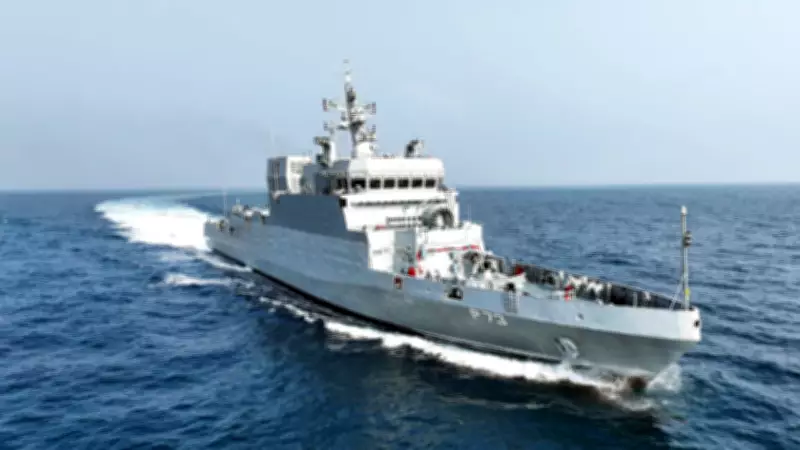
Indian Navy Commissions Advanced Anti-Submarine Warship INS Anjadip
The Indian Navy has significantly enhanced its coastal defence and underwater warfare capabilities with the commissioning of INS Anjadip, a next-generation Anti-Submarine Warfare Shallow Water Craft (ASW-SWC). Chief of the Naval Staff Admiral Dinesh K Tripathi officially commissioned the warship during a ceremony at Chennai Port on Friday, attended by senior naval and government officials.
Third Vessel in Strategic ASW-SWC Project
INS Anjadip represents the third vessel in an eight-ship ASW-SWC project, constructed by Garden Reach Shipbuilders and Engineers (GRSE) in Kolkata. This 77-metre warship has been specifically designed for operations in coastal and shallow waters and will operate under the Eastern Naval Command. The vessel's commissioning marks a substantial advancement in India's indigenous naval capabilities.
Advanced Systems and "Dolphin Hunter" Capabilities
Equipped with sophisticated anti-submarine warfare systems and indigenous sensors, including the hull-mounted sonar Abhay, INS Anjadip is armed with lightweight torpedoes and anti-submarine rockets. The ship is engineered to detect, track, and neutralize enemy submarines in littoral waters, earning it the formidable designation of a "Dolphin Hunter."

Key features of INS Anjadip include:
- High-speed water-jet propulsion system enabling speeds up to 25 knots
- Rapid response capability for sustained operations
- Among the largest Indian naval warships propelled by water-jets
- Specifically tailored for shallow-water combat challenges
Multi-Role Operational Capabilities
Beyond its primary anti-submarine function, INS Anjadip is capable of executing coastal surveillance, low-intensity maritime operations, and search-and-rescue missions. The vessel will strengthen the Navy's anti-submarine and coastal security capabilities while enhancing protection of maritime approaches, particularly those off Tamil Nadu and Puducherry.
Historical Significance and Naval Legacy
Named after Anjadip island off the coast of Karwar in Karnataka, the ship carries historical significance. The island witnessed decisive naval action during the 1961 operations that led to the liberation of Goa. INS Anjadip also continues the legacy of its predecessor, a Petya-class corvette that served the Navy from 1972 to 2003.
Accelerated Naval Inductions and Strategic Importance
Addressing the commissioning ceremony, Admiral Tripathi emphasized the Navy's rapid pace of inductions. "During the year 2025, the Indian Navy commissioned 12 warships and one submarine. This momentum continues with plans to induct about 15 more ships in 2026, setting an unprecedented benchmark and marking the highest rate of induction in our history," he stated.
The Admiral highlighted that the induction of INS Anjadip represents a major strengthening of India's underwater warfare capability. This commissioning marks another significant step in bolstering India's indigenous naval capabilities and enhancing maritime security in coastal and shallow waters, contributing to national defence preparedness.