

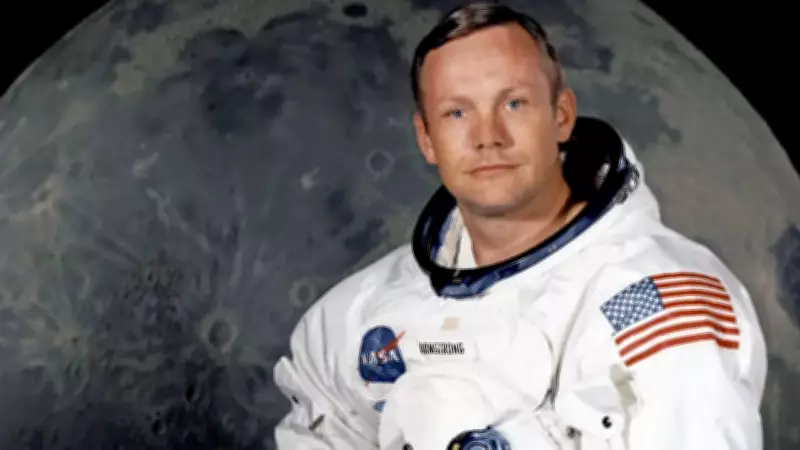
Neil Armstrong's Insight: The Human Drive to Face Challenges
Throughout human history, a consistent pattern emerges: individuals often do not select the simplest path. Instead, they gravitate toward formidable challenges, even when risks are elevated and outcomes remain uncertain. This tendency becomes particularly evident in the realm of space exploration, where endeavors push the boundaries of knowledge and capability.
The Enduring Legacy of Neil Armstrong's Words
Neil Armstrong, the first person to walk on the Moon during the historic Apollo 11 mission, encapsulated this concept with a powerful analogy. He famously stated, "I think we're going to the moon because it's in the nature of the human being to face challenges. We're required to do these things just as salmon swim upstream." This comparison to salmon, which instinctively swim against strong currents, underscores that humans undertake difficult tasks not merely for practical gains but as an intrinsic part of their nature, fostering learning and personal growth.
Connecting Past and Present: From Apollo to Artemis
Armstrong's perspective continues to resonate with contemporary space missions. On April 1, 2026, NASA successfully launched Artemis II, marking the first crewed mission to the Moon in over five decades. This achievement reflects the same human instinct that Armstrong highlighted years ago. Despite significant advancements in science and technology, space travel remains fraught with risks, demands meticulous planning, and involves inherent uncertainties. The Artemis program, much like Apollo, exemplifies humanity's unwavering commitment to exploration and discovery.

The Significance of the Salmon Analogy
In simple terms, Armstrong's quote elucidates that humans naturally seek out challenges. The journey to the Moon was not solely driven by scientific inquiry or geopolitical competition; it was propelled by a fundamental human urge to explore and overcome obstacles. The salmon analogy makes this idea accessible: just as salmon do not opt for the easiest route but instead navigate upstream, people frequently choose arduous paths that facilitate development and innovation. This mindset is essential for progress, as it encourages individuals to confront problems head-on rather than avoid them.
How This Mindset Shaped the Apollo Missions
During the 1960s, space exploration was in its nascent stages, characterized by unknown risks and complex technologies within the NASA Apollo program. The Apollo 11 Moon Landing stands as a pivotal moment in history, demonstrating that humans could venture beyond Earth, land on another celestial body, and return safely. Armstrong and his crew embraced these challenges as integral to their mission, showcasing that significant achievements often necessitate taking bold and difficult steps.
Why Humans Persist in Tackling Difficult Challenges
Armstrong's observation reveals a broader pattern in human behavior, evident across various domains of life. This inclination toward challenges manifests in:
- Scientific research projects that span years or decades to complete
- Space missions conducted in extreme and hostile environments
- Technological innovations requiring continuous testing and refinement
Even modern endeavors like Artemis II underscore that exploration demands substantial effort and risk-taking. Embracing such challenges enables the acquisition of new knowledge and the attainment of unprecedented goals.
Lessons on Progress from Neil Armstrong's Quote
The essence of Armstrong's message is clear: progress often stems from confronting hard problems, which can lead to groundbreaking discoveries. By engaging with challenges, humans can:
- Acquire novel insights and expand understanding
- Enhance technological capabilities and tools
- Explore uncharted territories and expand horizons
This pattern has remained consistent from the early days of space exploration to current programs, highlighting a timeless aspect of human nature.
Other Notable Quotes by Neil Armstrong
Beyond his famous challenge analogy, Armstrong left a legacy of inspirational words, including:

- "That’s one small step for man, one giant leap for mankind."
- "Mystery creates wonder and wonder is the basis of man's desire to understand."
- "Shoot for the stars but if you happen to miss shoot for the moon instead."
- "Each book holds an experience and an adventure."
- "I believe that every human has a finite amount of heartbeats. I don't intend to waste any of mine running around doing exercises."
The Relevance of Armstrong's Quote Today
Neil Armstrong's insight remains profoundly relevant in the modern era. Whether in space exploration or everyday endeavors, progress frequently arises from facing challenges rather than evading them. The quote affirms that such behavior is natural, driven by a desire to learn, discover, and push limits. As Armstrong suggested, advancement is often the result of choosing difficult paths and persevering through them, a principle that continues to guide human aspirations and achievements.





