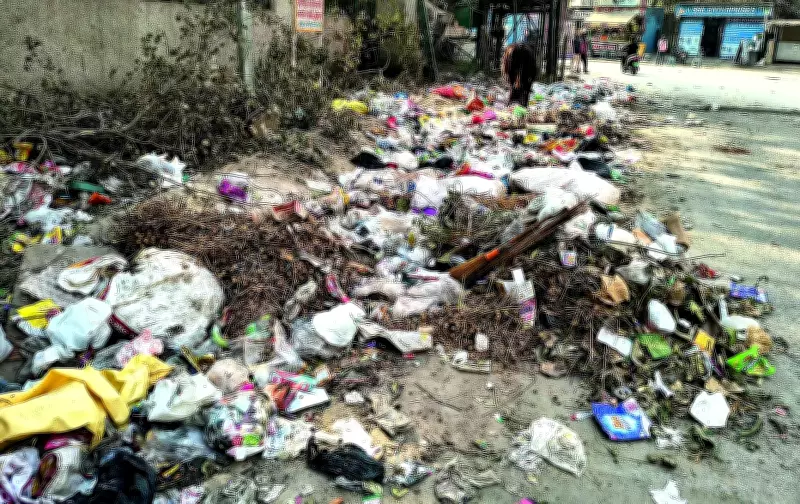
NGT Issues Stern Warning to Haryana Over Solid Waste Dumping Violations
The National Green Tribunal (NGT) has delivered a sharp reminder to the Haryana government regarding its previously imposed "complete prohibition" on littering and dumping of solid waste throughout the state. The tribunal explicitly warned that continued failure to enforce this critical environmental order could result in the prosecution of senior officials, including the chairman and member secretary of the Haryana State Pollution Control Board (HSPCB).
Timeline for Compliance and Escalation Risks
In a significant development, the NGT has granted the state a four-week window to submit comprehensive compliance reports. The matter has been officially listed for a crucial hearing on March 13, 2026. This upcoming session is poised to be decisive, as it may determine whether the tribunal will escalate its response. Potential actions include imposing substantial environmental compensation, initiating prosecution proceedings, or even implementing court-monitored enforcement mechanisms—steps the NGT has previously taken in other states grappling with similar systemic waste management failures.
Background of the Case and Systemic Failures
The current case was initiated by Prakash Yadav, a resident of Dharuhera, and unfolds against the backdrop of Haryana's protracted struggle with implementing scientific waste management practices. For years, the state has faced repeated judicial scrutiny for its failure to adhere to the basic provisions of the Solid Waste Management (SWM) Rules of 2016. Since 2018, multiple NGT orders have consistently highlighted rampant open dumping, sluggish remediation of legacy waste sites, and a near-total absence of functional waste processing facilities in smaller towns and urban bodies.

Assessments conducted by the Central Pollution Control Board (CPCB) have repeatedly identified Haryana as one of the states burdened with large backlogs of unprocessed waste and characterized by inconsistent enforcement of environmental regulations. It was within this context of persistent non-compliance that the tribunal's landmark order dated July 26, 2024, was issued. This order, which is currently under execution, imposed a blanket ban on illegal dumping after the NGT observed that municipal bodies were "neither preventing littering nor penalising violators," leading to "serious environmental degradation... violating the fundamental right to health and clean environment."
The NGT's Directives and Enforcement Framework
The tribunal's order was unequivocal: "There shall be complete prohibition on littering/dumping of Solid Waste at unauthorised places... in the entire State of Haryana." To bolster this prohibition, the NGT mandated a strict penalty structure: a fine of Rs 5,000 for first-time violations involving non-bulk waste, Rs 10,000 for repeat offences, and a substantial Rs 25,000 to Rs 50,000 for violations involving bulk waste dumping. Furthermore, the bench directed that all compensation collected through these fines must be used exclusively for the proper processing and scientific management of solid waste.
Despite this clear regulatory framework, the NGT bench, comprising Justice Arun Kumar Tyagi and Dr. Afroz Ahmad, noted with concern that the submitted compliance reports remained "materially deficient" and that on-ground enforcement was patchy and ineffective. The bench expressed particular disappointment with the performance of the HSPCB, remarking critically that the board had "completely ignored its statutory obligations" and "cannot work as a subservient subordinate wing of the State Government."
Broader Criticisms and Legal Consequences
These pointed comments resonate with similar criticisms the tribunal has leveled in past cases concerning air pollution and illegal mining, where the HSPCB was found to be overly reliant on government inputs instead of conducting independent inspections or exercising its full enforcement powers under the Environment (Protection) Act. The NGT warned explicitly that continued failure to implement mandatory actions under the SWM Rules could compel it to "impose environmental compensation on HSPCB and also order prosecution of the Chairman and Member Secretary."

The tribunal also invoked its order from August 29, 2025, which established that non-compliance with waste-management directives constitutes an offence punishable under Section 26 of the NGT Act, 2010. This serves as a clear signal that individual officials—not just government departments—could face direct legal consequences for inaction.
Ground Reality in Haryana's Urban Centers
The town of Dharuhera, which is the focal point of the execution plea, exemplifies problems widespread across Haryana's smaller urban bodies. These include the absence of functional waste-processing plants, a continued dependence on open dumping at informal and unauthorized sites, critical shortages of manpower, and significant delays in creating necessary waste management infrastructure. Similar challenging conditions persist in other towns such as Rewari, Jhajjar, Bhiwani, and Mahendragarh, where municipal bodies continue to rely on makeshift dumping practices despite repeated judicial directives to cease.
In its submission to the tribunal, the HSPCB reported that it had recommended environmental compensation of Rs 1.11 crore against the Municipal Corporation of Dharuhera and had initiated prosecution proceedings against its secretary. The board also cited penalties imposed on other entities, including the National Highways Authority of India (NHAI), the Haryana Shahari Vikas Pradhikaran (HSVP), and the HSIIDC in Bawal, for incidents of illegal dumping.