

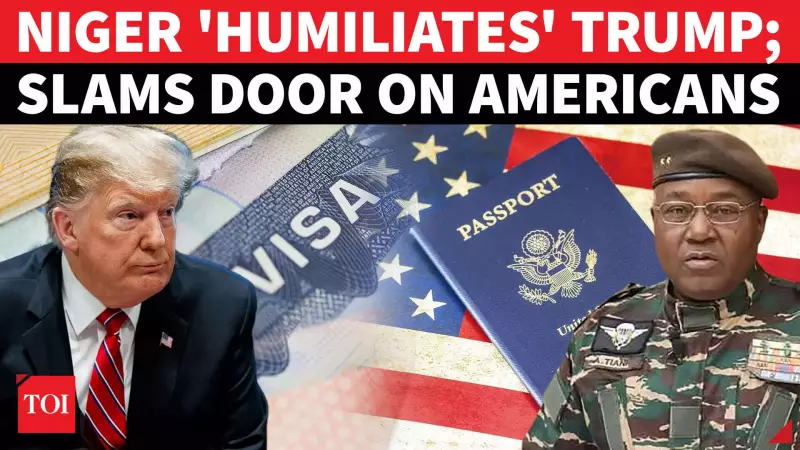
In a bold act of diplomatic retaliation, the West African nation of Niger has announced an indefinite ban on entry for all United States citizens. This decisive move comes as a direct response to Washington's recent expansion of travel restrictions targeting Niger and several other African countries.
A Principle of Reciprocity Sparks a Visa War
The government of Niger has grounded its decision firmly in the principle of reciprocity, a cornerstone of international relations. The action signals a dramatic and assertive shift in the foreign policy stance of Niger, reflecting a growing trend among Sahel nations. These countries are increasingly pushing back against policies they perceive as forms of Western interference and imposition.
The trigger for this escalating visa war was the announcement from Washington. U.S. President Donald Trump justified the expanded restrictions, citing concerns over terrorism and issues related to visa overstays. However, instead of acquiescing, African governments like Niger's are choosing to meet the challenge head-on.

Visas Become Tools of Geopolitical Resistance
This tit-for-tat exchange is transforming travel documents into potent instruments of geopolitical resistance. By enacting its own ban, Niger is not merely protesting a policy but actively redrawing the balance of power and asserting its sovereignty on the regional stage. The move underscores a growing willingness among Sahel states to defy traditional Western influence and set their own diplomatic terms.
The development, reported on December 26, 2025, marks a significant deterioration in US-Africa relations, particularly with nations in the volatile and strategically important Sahel region. The indefinite nature of Niger's ban indicates a prepared stance for a prolonged diplomatic standoff.
Broader Implications for Regional Stability
The consequences of this reciprocal ban are likely to extend far beyond travel inconveniences. It can potentially affect:
- Security cooperation: Joint counter-terrorism efforts in the Sahel, a region plagued by extremist groups, could face severe disruption.
- Economic and aid ties: Development projects and humanitarian aid channels managed by US agencies and nationals may be jeopardized.
- Regional alliances: Niger's move may encourage other nations contemplating similar responses to US or European policies, potentially leading to a broader realignment.
This episode highlights a new era where African nations are leveraging all tools at their disposal, including visa policies, to challenge what they see as unilateral and discriminatory actions by Western powers. The diplomatic retaliation by Niger is a clear message that such policies may no longer go unanswered, setting a precedent for international relations in the region.






