Kim Ju Ae's Rise: North Korea's Teenage Heir Apparent Signals Dynastic Shift
For the vast majority of the international community, North Korea continues to function as an impenetrable fortress of secrecy. Beyond the routine missile launches, grandiose military parades, and meticulously curated propaganda disseminated by state-controlled media, the internal machinations of Pyongyang's ruling elite remain profoundly shrouded in mystery. Rarely does a single image puncture this veil of opacity. However, a recent photograph has done precisely that, igniting global discourse about the future of one of the world's most enduring political dynasties.
A Deliberate Placement: The Girl Beside the Leader
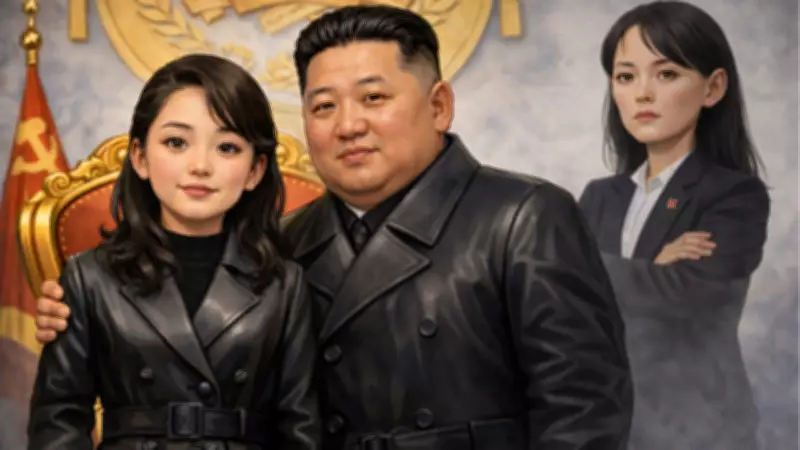
On New Year's Day 2026, inside the solemn Kumsusan Palace of the Sun—the resting place for the embalmed bodies of former leaders Kim Il Sung and Kim Jong Il—Kim Jong Un participated in a customary tribute beneath ornate chandeliers and marble arches. Superficially, this appeared to be another meticulously staged moment from an intensely secretive regime. Yet, a critical detail distinguished this image: standing shoulder-to-shoulder with the Supreme Leader was a young girl, displaying remarkable calm and confidence.
This was no incidental placement at the frame's edge. The girl, identified as Kim Ju Ae and believed to be approximately 13 years old, was positioned with clear, deliberate intent. Her growing visibility alongside her father has powerfully reignited speculation: Is Kim Ju Ae being groomed to become North Korea's next leader?

From "Beloved Daughter" to Presumptive Successor
The figure at the center of this speculation is rapidly evolving from merely the regime's "beloved daughter" into its potential future sovereign. According to recent briefings from South Korea's National Intelligence Service to lawmakers, Kim Ju Ae appears increasingly likely to be formally designated as North Korea's successor. Intelligence analysts emphasize that her public appearances are not casual family outings but are carefully orchestrated events laden with political significance.
Her introduction to the global stage was sudden and symbolic. In November 2022, Kim Ju Ae made her debut public appearance at a long-range missile launch site. Photographed holding her father's hand in front of an intercontinental ballistic missile while wearing a white puffer jacket, the message was unambiguous: she is intimately connected to the regime's core military and strategic identity.
Since that pivotal moment, her portfolio of appearances has expanded significantly. She has consistently accompanied Kim Jong Un to:
- Critical missile tests and weapons demonstrations
- Large-scale military parades showcasing national might
- Key industrial and defense-related project inaugurations
- Factory openings and strategic economic inspections
In a nation where public visibility is a tightly controlled privilege, each appearance has methodically shifted her from the periphery to the very center of the regime's iconography.
The Sacred Paektu Bloodline and Unprecedented Succession
Succession in North Korea transcends conventional political processes like elections or constitutional debate. Instead, legitimacy is derived from what state propaganda terms the "Paektu Bloodline." Mount Paektu, the snow-capped volcano on the country's northern border, occupies a sacred place in the national mythology as the revolutionary birthplace and the divine source of the Kim family's authority.
For three generations, leadership has followed a strict patriarchal line: from founding leader Kim Il Sung to his son Kim Jong Il, and then to his grandson Kim Jong Un. The designation of a female successor would be entirely unprecedented, challenging this longstanding male-dominated tradition.
The Aunt in the Shadows: Kim Yo Jong's Pivotal Role
Dynastic succession is rarely straightforward, even within Pyongyang's closed circles. Following his consolidation of power in 2011, Kim Jong Un notoriously ordered the execution of his uncle, Jang Song Thaek, a move widely interpreted as eliminating a potential rival.

This context makes the role of Kim Yo Jong, Kim Jong Un's younger sister, particularly crucial. She has spent years amassing influence, issuing stern statements against foreign governments, threatening South Korea, and reportedly orchestrating significant actions like the 2020 demolition of the inter-Korean liaison office. As one of her brother's most trusted lieutenants, she has effectively functioned as his political voice.
Should Kim Ju Ae be positioned as heir while still a minor, the practical governance of the state would likely require a seasoned adult regent. Kim Yo Jong is widely considered the most plausible candidate for such a role. However, a critical question persists: would a woman who has diligently consolidated power willingly relinquish control to her young niece when the time comes?
Underlying Urgency: Health and Economic Realities
The heightened focus on succession planning may be linked to concerns over Kim Jong Un's health. Now in his early forties, the North Korean leader has long been reported by foreign intelligence agencies to struggle with severe obesity, diabetes, and hypertension—conditions that also afflicted his father and grandfather, neither of whom lived past their late sixties.
While reliable medical information remains scarce, periodic intelligence assessments speculate about his well-being. If the regime perceives even a remote possibility of an unexpected leadership vacuum, preemptively securing dynastic continuity becomes a strategic imperative. By elevating Ju Ae's profile now, Kim Jong Un may be attempting to cement her legitimacy while he retains the absolute authority to enforce it.
This political maneuvering unfolds against a fragile economic backdrop. Years of stringent international sanctions, imposed in response to Pyongyang's nuclear and missile programs, have severely restricted trade, global financial access, and foreign investment. China remains the primary economic lifeline, supplying essential fuel, food, and industrial inputs.
Independent analyses suggest North Korea allocates a staggering portion of its resources—often estimated at over 25% of economic output—to military spending, sustaining its expanding nuclear and ballistic missile capabilities. Meanwhile, many ordinary citizens depend on informal black markets, known as Jangmadang, for basic necessities. Despite these strains, the regime continues to prioritize military development and strategic deterrence above all else.
The Unanswered Question
To date, no official declaration regarding succession has been issued by Pyongyang. Nevertheless, Kim Ju Ae's increasingly prominent role in state imagery has fundamentally altered the discourse surrounding North Korea's future leadership. In a nation where symbolism is never accidental, the consistent image of a teenage girl standing beside the Supreme Leader at the country's most pivotal events carries profound political weight.
Whether Kim Ju Ae ultimately ascends to leadership, or whether other influential figures within the Kim family constellation assert their claims, remains uncertain. What is unequivocally clear is that the next chapter for the Paektu dynasty is already being quietly drafted, with a young girl poised potentially at its very center.