

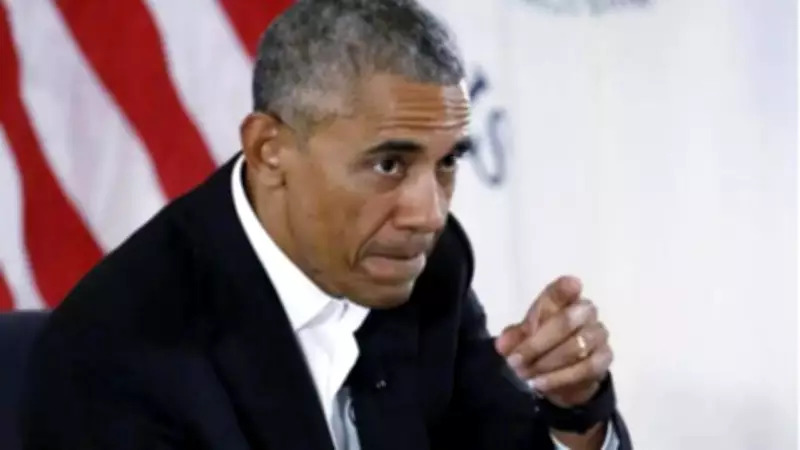
Barack Obama's Enduring Quote: Human-Made Problems, Human-Led Solutions
No matter how much time passes, certain quotes retain their profound meaning and relevance. One such statement by former U.S. President Barack Obama continues to resonate deeply. At first glance, it appears straightforward, but a closer reading reveals a powerful lens through which to view the world and the daily struggles people face. This quote avoids complex jargon or ambiguous concepts, instead focusing on a fundamental truth: many societal issues stem from human actions, and humans possess the capacity to resolve them. It shifts the narrative from helplessness to accountability, emphasizing that progress begins with dedicated human effort.
Quote of the Day by Barack Obama
"Our problems are man-made, therefore they can be solved by man, and man can be as big as we want."
Understanding the Meaning Behind the Quote
The first segment of the quote, "People make our problems," makes a clear assertion. This does not imply that every global issue is directly caused by individuals, but it highlights how major challenges often arise from human systems, decisions, and behaviors. Humans design and operate political structures, economic frameworks, and industrial processes, which can inadvertently lead to unintended consequences and crises.

The second part, "therefore they can be solved by man," logically follows from the initial idea. If humans are the source of problems, they also hold the ingenuity, collaboration, and innovation needed to devise solutions. This reinforces the belief that remedies are within reach, not dependent solely on external forces.
The final phrase, "man can be as big as we want," expands the perspective to human potential. It suggests that there are no inherent limits to what humanity can achieve when united and ambitious. This encourages thinking about growth, responsibility, and aspiration, pushing beyond perceived boundaries.
The Historical Context of the Quote
Barack Obama served as the 44th President of the United States from 2009 to 2017, a period marked by significant domestic and international challenges. His tenure included navigating the aftermath of the 2008 financial crisis, ongoing conflicts, and growing debates on climate change and healthcare reform.
This quote exemplifies a broader theme prevalent in his speeches: the power of collective human action to address even the most daunting issues. Policies during his presidency, such as those focused on economic recovery, healthcare expansion, and environmental protection, often reflected this belief in human agency and shared goals.
Obama's communication style frequently aimed to engage the public, fostering a sense of empowerment rather than passive waiting for improvement. This quote aligns with that approach, urging active participation and responsibility.
Why This Quote Still Matters Today
Despite being spoken years ago, the quote remains highly relevant. Many contemporary problems are directly linked to human choices and systems. For instance, climate change is widely attributed to industrial activities, deforestation, and energy consumption, yet human-driven initiatives like renewable energy development, conservation efforts, and policy adjustments offer pathways to mitigation.
Similarly, technological advancements bring both benefits and challenges. Issues such as data privacy, artificial intelligence ethics, and digital inequality stem from how technology is created and utilized. The quote reminds us that these are solvable through informed decisions, strategic planning, and creativity.
On a personal level, this idea applies to everyday struggles in work, relationships, or self-improvement. Recognizing that change is possible can motivate proactive steps toward resolution, reducing feelings of overwhelm.
A Closer Look at the Idea of Responsibility
Central to the quote is the concept of responsibility. By attributing problems to human actions, it shifts blame from external factors to accountable behavior. This perspective can transform how individuals and organizations approach challenges.

It views problems not as fixed or inevitable but as opportunities for analysis and action. Identifying root causes becomes the first step toward solutions, followed by collaboration, planning, and sustained effort. This method is common in fields like public policy, science, and engineering, where understanding human impact is crucial for effective problem-solving.
Human Potential and the Idea of Growth
The quote's final part emphasizes human potential. "Man can be as big as we want" refers to achievable accomplishments and expansive aspirations, suggesting that limitations often stem from mindset and effort rather than immutable barriers.
Historically, this mindset has driven progress, from scientific breakthroughs to social reforms. Achievements like space exploration and medical advances demonstrate humanity's capacity for learning and innovation. The quote encourages a similar outlook, highlighting that progress depends on collective decisions and ambitious goal-setting.
How This Idea Connects with Everyday Life
While the quote addresses global issues, its principles apply to smaller-scale problems. Daily challenges in education, career, or personal life often originate from changeable choices, habits, or circumstances. Acknowledging this can foster better problem-solving strategies and a proactive attitude.
Seeing problems as solvable promotes positive action and reduces stress, shifting focus from the issue itself to potential remedies. It also underscores the value of diverse perspectives in finding effective solutions.
The Role of Collective Action
Another key aspect is collective action. Although individuals can create and address problems, many issues require coordinated efforts from groups, governments, and communities. Challenges in public health, environmental conservation, and economic stability often demand shared responsibility and collaboration.
The quote supports this by affirming that humans can unite to solve problems, emphasizing teamwork over isolated endeavors to achieve common objectives.
Other Famous Quotes by Barack Obama
- "Change will not come if we wait for some other person or some other time."
- "The best way to not feel hopeless is to get up and do something."
- "We are the change that we seek."
- "If you’re walking down the right path and you’re willing to keep walking, eventually you’ll make progress."
- "Focusing your life solely on making a buck shows a poverty of ambition."
A Message That Continues to Inspire
Barack Obama's quote endures due to its clarity and applicability. It does not offer a complex theory or specific answer but provides a mindset adaptable to various situations. By linking problems and solutions directly to human actions, it promotes responsibility, hard work, and the belief that progress is achievable.
In a world where challenges can seem overwhelming, this perspective is invaluable. It reassures that humans can always analyze issues and work toward resolutions, fostering hope and determination.





