

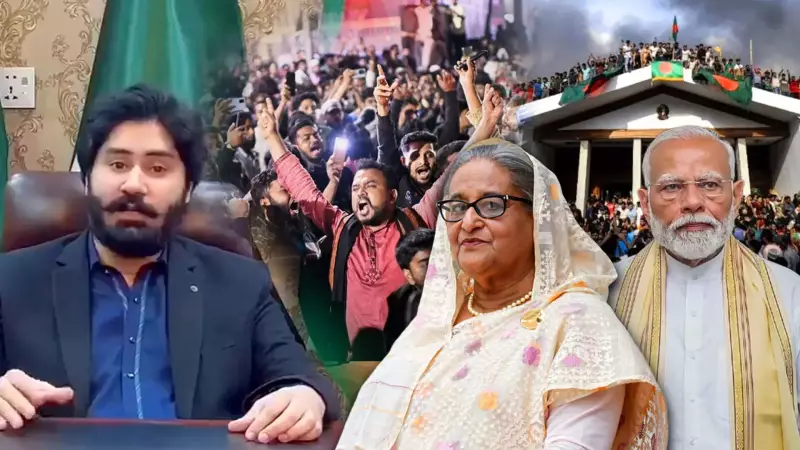
Tensions in South Asia witnessed a fresh spike after a youth leader from Pakistan's ruling party issued a stark military warning to India concerning Bangladesh. The provocative remarks, advocating for a formal defence pact between Islamabad and Dhaka, have added a new layer of rhetoric to regional dynamics.
Provocative Rhetoric from PML-N Leader
On December 23, 2025, Kamran Saeed Usmani, a prominent youth leader within the Pakistan Muslim League-Nawaz (PML-N), directly threatened India with armed retaliation. Usmani stated that Pakistan would not stand idle if Bangladesh's sovereignty faced any perceived threats. He explicitly referenced Pakistan's missile arsenal and armed forces as the means of response, marking a significant escalation in verbal posturing.
While these statements do not represent the official policy of the Pakistani government, analysts note they are part of a growing pattern of aggressive commentary from figures associated with the ruling establishment. The comments were made against a backdrop of longstanding geopolitical friction in the region.

Call for a Formal Military Alliance
Going beyond mere threats, Usmani laid out a vision for deeper strategic cooperation between Pakistan and Bangladesh. He called for the establishment of a formal military alliance between the two nations. His proposal included potentially contentious elements such as:
- Mutual military bases on each other's soil.
- Enhanced strategic coordination, particularly concerning port access and sea control.
This call for an alliance is seen as an attempt to counter India's influence in South Asia. Usmani accused India of attempting to destabilize Bangladesh through what he described as ideological pressure and actions along the shared border. His remarks aim to frame regional tensions through a lens of sovereignty and external interference.
Regional Implications and Official Context
The threat, though made by a party figure and not a state official, is likely to resonate in diplomatic circles. It underscores the persistent undercurrents of hostility and the potential for political rhetoric to inflame existing sensitivities. India has historically maintained a close relationship with Bangladesh, built on extensive economic, cultural, and strategic ties.
Experts suggest that such statements, while inflammatory, often serve domestic political purposes in Pakistan. However, they also contribute to an environment of mistrust and can complicate delicate diplomatic engagements. The emphasis on missile capabilities and military bases introduces a tangible, hardware-oriented dimension to the war of words.
The incident highlights the fragile nature of regional peace, where statements from political actors can quickly capture headlines and stir public sentiment. The response from Indian officials and the reaction from Bangladesh, which values its strategic autonomy, will be crucial in determining whether this rhetoric leads to any substantive diplomatic friction.






