

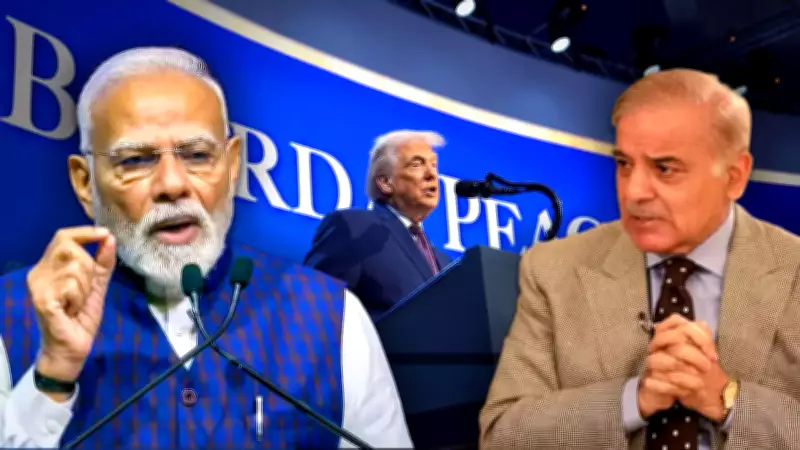
Pakistan PM Shehbaz Sharif Heads to Washington as India Weighs Strategic Cost of Joining Trump's Board of Peace
A fresh diplomatic calculus is unfolding on the global stage as Pakistan has officially confirmed that Prime Minister Shehbaz Sharif will attend the inaugural meeting of Donald Trump's Board of Peace in Washington. India, having received the same invitation, has stated it is still carefully reviewing the proposal, highlighting a significant divergence in strategic approaches between the two neighboring nations.
The Evolving Platform: From Gaza Reconstruction to Global Peace Mechanism
The Board of Peace, initially conceived with a focus on Gaza reconstruction efforts, is now being pitched as a comprehensive global peace mechanism that operates outside traditional United Nations channels. This shift represents a bold attempt to create an alternative diplomatic forum, potentially reshaping international conflict resolution dynamics.
While Pakistan has quickly aligned itself with this initiative, demonstrating eagerness to engage with the Trump administration's vision, no major G7 country has formally signed up to participate. This absence of key Western powers adds a layer of complexity to the forum's credibility and future impact.

India's Deliberate Review: Navigating Complex Diplomatic Waters
For New Delhi, the decision to join or abstain from the Board of Peace is layered with multiple strategic considerations. The platform has become more than mere optics; it represents a critical test of alignment and diplomatic balance in an increasingly multipolar world.
Complicating matters is Donald Trump's repeated claim that he personally intervened to stop last year's escalation between India and Pakistan—a version of events that India firmly rejects. This historical context adds tension to the current invitation, as participating in the forum could inadvertently validate narratives that New Delhi disputes.
Strategic Calculations: Joining Versus Staying Out
India faces a classic diplomatic dilemma: joining the Board of Peace could provide an opportunity to shape the narrative from within, offering a seat at the table where global peace discussions occur. This approach might allow India to influence the forum's direction and ensure its interests are represented.
Conversely, staying out preserves crucial strategic distance, particularly as India-US relations continue to recalibrate following recent tariff tensions and ongoing trade negotiations. Maintaining independence from what some view as a potentially unilateral American initiative could strengthen India's position as a non-aligned diplomatic power.
Broader Implications for Regional and Global Diplomacy
The divergent responses from Islamabad and New Delhi underscore deeper geopolitical realities. Pakistan's quick acceptance signals its desire to strengthen ties with the United States under a potential Trump administration, while India's cautious review reflects its complex position balancing relationships with multiple global powers.
As the Board of Peace meeting approaches, all eyes will be on which other nations choose to participate and how the forum evolves beyond its initial conception. The decisions made in the coming weeks could have lasting implications for how peace initiatives are structured outside traditional international institutions.






