

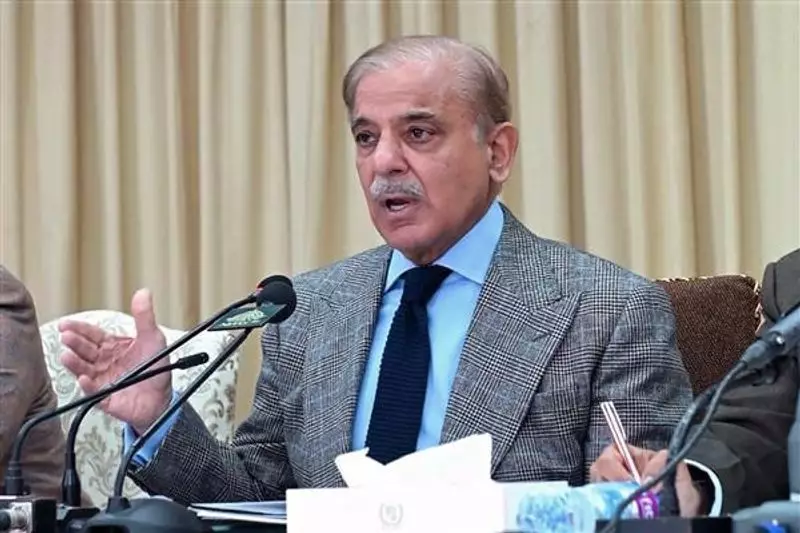
In a significant diplomatic development, Pakistan's Prime Minister Shehbaz Sharif has once again extended his gratitude to former United States President Donald Trump for his role in resolving conflicts between India and Pakistan. This acknowledgment comes during a period of ongoing tensions between the two nuclear-armed neighbors.
Pakistan's Persistent Gratitude Toward US Mediation
The Pakistani Prime Minister made these remarks during a recent session of the National Assembly, where he highlighted the importance of international mediation in addressing longstanding issues between India and Pakistan. Shehbaz Sharif specifically thanked the former American president for his efforts in de-escalating tensions and attempting to facilitate dialogue between the two South Asian nations.
This isn't the first time the Pakistani leadership has acknowledged Trump's involvement in regional diplomacy. The appreciation stems from Trump's earlier offers to mediate on the Kashmir dispute, which has been a persistent flashpoint in Indo-Pak relations for decades. The Prime Minister's repeated acknowledgments indicate the importance Pakistan places on international involvement in resolving bilateral issues with India.

Historical Context of US Involvement
The relationship between India and Pakistan has been marked by conflict and tension since their independence in 1947. The United States has periodically attempted to mediate between the two countries, with varying degrees of success. During his presidency, Donald Trump had offered to help resolve the Kashmir issue on multiple occasions, though India has consistently maintained that Kashmir is a bilateral matter that doesn't require third-party intervention.
India's official position has always been that all outstanding issues with Pakistan should be resolved through direct bilateral discussions, without external mediation. This fundamental difference in approach has complicated international efforts to facilitate dialogue between the neighboring nations. Despite this, Pakistan continues to seek international support for its position on various disputes with India.
Current Implications and Regional Dynamics
The Prime Minister's latest expression of gratitude comes at a time when both countries are navigating complex domestic and international landscapes. Shehbaz Sharif's comments reflect Pakistan's ongoing strategy to internationalize its disputes with India, particularly regarding Kashmir. This approach contrasts sharply with India's preference for handling matters through direct bilateral channels.
The acknowledgment also highlights the changing dynamics of international diplomacy in South Asia, where major powers like the United States continue to play significant roles in regional stability. While the effectiveness of such mediation efforts remains debated, the repeated thanks from Pakistan's leadership indicates they value international attention to their concerns with India.
Regional experts note that such diplomatic gestures are part of broader foreign policy strategies employed by both India and Pakistan. While Pakistan seeks multilateral approaches to conflict resolution, India emphasizes bilateral mechanisms. This fundamental difference in diplomatic methodology continues to shape how international actors engage with the two countries and their longstanding disputes.
The development underscores the ongoing complexity of Indo-Pak relations and the continuing role that major world powers play in South Asian geopolitics. As both nations move forward, the approach to conflict resolution and international mediation will likely remain a point of divergence in their respective foreign policies.






