

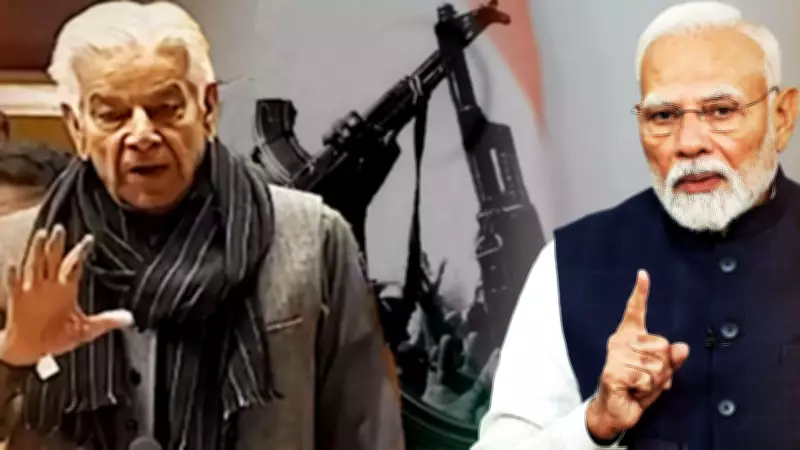
Pakistan's Defence Minister Makes Blunt Admission About Afghan Wars
In a rare moment of candor, Pakistan's Defence Minister Khawaja Asif has publicly acknowledged that his country's participation in what he termed a "Made in America" jihad during the Afghan wars was a significant strategic mistake. Speaking with unusual frankness, Asif described Pakistan's historical role as a "rented ally" during the prolonged conflict in Afghanistan, emphasizing that the nation failed to learn crucial lessons from that experience.
Warning Against Foreign Sponsorship Repeats
The minister issued a stark warning against seeking foreign sponsorship again, suggesting that Pakistan must chart its own independent course in regional security matters. This admission represents a notable departure from Pakistan's typically defensive posture regarding its involvement in Afghanistan spanning decades of conflict and geopolitical maneuvering.
Swift Return to Familiar Narrative
However, this moment of strategic introspection proved remarkably brief. Almost immediately following his admission, Asif pivoted to revive a familiar accusation against India, claiming without presenting evidence that New Delhi has been using Afghanistan as a base to indirectly target Pakistan. This rapid transition from self-critique to external blame highlights what analysts describe as Pakistan's persistent strategic dilemma.

This contradictory stance exposes the fundamental tension within Pakistan's security establishment—between acknowledging past policy failures and maintaining the longstanding habit of attributing security challenges to external actors, particularly India. While Pakistani lawmakers simultaneously spoke of national unity and combating terrorism, Asif's remarks revealed how deeply the country's security discourse remains trapped between moments of truth and reflexive deflection.
India's Perspective on the Statement
From India's viewpoint, Asif's statement merely underscores what New Delhi has long maintained: that Islamabad continues to avoid confronting the direct consequences of its own policies and strategic choices. The Indian perspective suggests that until Pakistan moves beyond blaming external actors for internal security challenges, meaningful progress in regional stability will remain elusive.
Strategic Implications and Regional DynamicsThe timing and content of these remarks carry significant implications for South Asian geopolitics. As Afghanistan continues to navigate its post-conflict reality, Pakistan's dual narrative of admitting past errors while maintaining accusations against India creates complex diplomatic challenges for all regional stakeholders. This pattern of acknowledgment followed by accusation suggests that while Pakistan may recognize certain historical missteps intellectually, it remains institutionally committed to established narratives of external threat.
The broader context reveals a nation grappling with its security identity—caught between the practical lessons of history and the political convenience of familiar narratives. As regional dynamics continue to evolve, Pakistan's ability to reconcile these contradictory impulses will significantly influence not only its own security but the stability of South Asia as a whole.






