

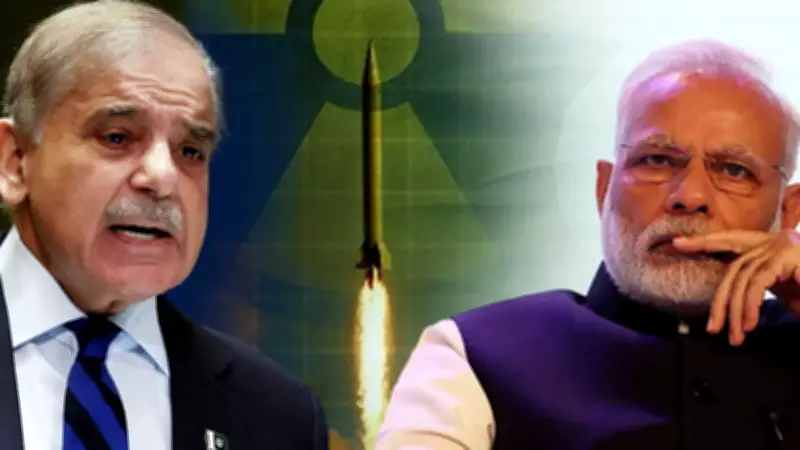
Pakistan Redirects US Missile Concerns Toward India's Long-Range Capabilities
In a strategic deflection following critical US intelligence assessments, Pakistan has claimed that India is actively developing a long-range ballistic missile with a range exceeding 12,000 kilometres. This accusation comes directly after the United States placed Pakistan alongside Russia, China, North Korea, and Iran in its 2026 Annual Threat Assessment for missile development activities.
US Intelligence Report Triggers Pakistani Response
The catalyst for this diplomatic exchange was US Director of National Intelligence Tulsi Gabbard's comprehensive threat assessment, which specifically highlighted Pakistan's long-range ballistic missile development as potentially including intercontinental ballistic missiles (ICBMs) capable of reaching American territory. The report stated clearly that these systems "potentially could include ICBMs with the range capable of striking the homeland," placing Pakistan in concerning company among nations developing advanced missile technology.
Rather than directly addressing the characterization of its own program, Pakistan's Foreign Office chose to redirect Washington's attention toward its regional neighbor. In an official statement, Pakistan asserted that India's missile development "raises broader security concerns beyond the region" and represents a significant escalation in South Asian military capabilities.

Three Specific Indian Systems Under Scrutiny
Pakistan's claims center on three distinct Indian missile systems that collectively represent advancing capabilities:
- Agni-V: Already operational with a confirmed range exceeding 8,000 kilometres, this land-based missile represents India's current longest-range capability
- Agni-VI: A three-stage intercontinental ballistic missile system with an estimated range of up to 12,000 kilometres that has been publicly confirmed as in development since May 2018
- K-5 Submarine-Launched Ballistic Missile: With a range between 5,000 and 8,000 kilometres, this system is being developed specifically for India's Arihant-class nuclear submarines
Pakistan's strategic argument extends beyond mere technical specifications. The Foreign Office contends that deployment of the K-5 missile on extended ocean patrols would enable India to target distant regions including Europe, Russia, Israel, and American Pacific territories. This capability, Pakistan argues, contradicts India's publicly stated posture of maintaining "credible minimum deterrence" and represents a significant expansion of strategic reach.
Strategic Context and Pakistani Motivations
The geopolitical logic behind Pakistan's deflection becomes clear when examining comparative capabilities. Pakistan's longest-range operational missile, the Shaheen-III, reaches only 2,750 kilometres—sufficient to cover Indian territory but well below the 5,500 kilometre threshold that defines an intercontinental ballistic missile.
This disparity comes against a backdrop of recent US sanctions. In December 2024, the US State Department imposed sanctions on Pakistan's National Development Complex and three private companies for procuring equipment specifically intended for long-range missile development. Pakistan has not forgotten this scrutiny, and its current claims about Indian capabilities serve multiple strategic purposes.
While Pakistan's assertion about India's Agni-VI development is factually grounded—the program has been publicly acknowledged for years—the timing and framing represent a calculated diplomatic maneuver. Pakistan is using established facts about Indian missile development to deflect attention from American concerns about its own program while simultaneously arguing that Washington applies its South Asian threat assessments selectively.
The broader implication is a challenge to perceived double standards in global non-proliferation efforts, with Pakistan positioning itself as highlighting what it views as inconsistent application of scrutiny between regional rivals.

As of this reporting, India has maintained official silence and has not publicly responded to Pakistan's specific allegations regarding its missile development programs. The diplomatic exchange occurs within the complex framework of South Asian security dynamics, where missile capabilities represent both national security imperatives and tools of diplomatic leverage in regional power calculations.





