

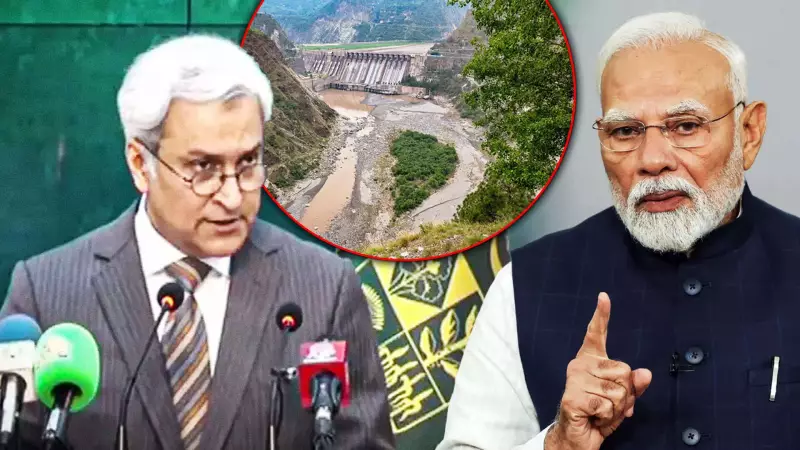
Pakistan has lodged a fresh protest against India's suspension of the Indus Water Treaty, expressing serious concern over sudden changes in the flow of the Chenab River. The development marks a significant escalation in the long-standing water-sharing dispute between the two neighboring nations.
Pakistan's Desperate Appeal Over Water Crisis
On December 18, 2025, Pakistan's Indus water commissioner sent an urgent communication to Indian authorities. The letter highlighted "abrupt variations" in the Chenab River's flow, which Pakistan claims is critically impacting its agricultural sector. The country's Foreign Office has emphasized that this period is crucial for crops, framing the issue as a matter of immediate food security and economic stability.
India's Firm Stance: Blood and Water Cannot Flow Together
India's position remains unequivocal. The decision to suspend the treaty's provisions comes as a direct response to the Pahalgam terror attack. Indian officials have reiterated that "blood and water cannot flow together," linking continued water cooperation to an environment free from cross-border terrorism.

This policy was foreshadowed by Prime Minister Narendra Modi during his Independence Day speech, where he labeled the decades-old Indus Water Treaty as unjust and one-sided. PM Modi argued that Indian rivers had been sustaining lands used by an adversary, while farmers within Pakistan itself faced water shortages due to their own government's mismanagement.
A Treaty Under Scrutiny and Regional Implications
The Indus Water Treaty, brokered by the World Bank in 1960, allocates the waters of the eastern rivers (Sutlej, Beas, Ravi) to India and the western rivers (Indus, Jhelum, Chenab) primarily to Pakistan. India's current suspension focuses on the provisions related to the western rivers, particularly impacting the Chenab.
Pakistan's complaint centers on the timing and volume of water releases, which it says are now unpredictable and detrimental to its irrigation schedules. The situation places the future of one of the world's most cited transboundary water agreements in serious jeopardy, with potential ramifications for regional diplomacy and stability.
Analysts suggest India's move is a strategic geopolitical response, leveraging its position as an upstream nation to pressure Pakistan on the issue of terrorism. The suspension underscores a hardening of India's approach to bilateral disputes following acts of violence it attributes to Pakistan-based groups.






