

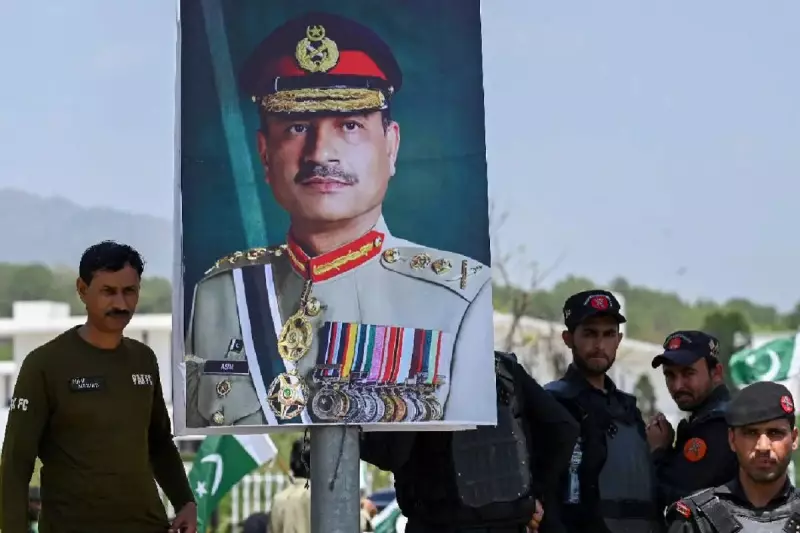
Pakistan has firmly rejected concerns raised by the United Nations High Commissioner for Human Rights regarding the country's recent constitutional changes, asserting its sovereign right to legislate through elected representatives.
Diplomatic Standoff Over Constitutional Changes
In a strong response issued on Sunday, Pakistan's Foreign Office dismissed UN High Commissioner for Human Rights Volker Türk's criticism of the 27th constitutional amendment, urging him to avoid remarks that reflect political bias and misinformation. The diplomatic exchange highlights growing international scrutiny of Pakistan's domestic political developments.
The Foreign Office emphasized that like all parliamentary democracies, legislation and constitutional amendments remain the exclusive domain of Pakistan's elected representatives. While acknowledging the importance of the High Commissioner's work, Pakistan expressed regret that its views and ground realities were not properly reflected in the UN statement.

Controversial Amendments Spark Debate
The constitutional changes, approved by a joint parliamentary committee of the Senate and National Assembly on November 12, have ignited intense political debate within Pakistan. The opposition has warned that the government was effectively sounding the death knell for the Supreme Court through these amendments.
Key changes introduced by the 27th amendment include abolishing the post of Chairman, Joint Chiefs of Staff Committee (CJCSC) and replacing it with a new Chief of Defence Forces (CDF). The amendment also proposes establishing a Federal Constitutional Court and reducing certain powers of the Supreme Court, raising concerns about judicial independence.
International Concerns and Domestic Defense
Volker Türk had criticized Islamabad on Friday for adopting the amendment without broad consultation with legal experts and civil society. The UN human rights chief warned that the hastily adopted changes could undermine judicial independence and raise questions about military accountability.
Pakistan countered these concerns by reaffirming its full commitment to protecting human rights, human dignity, basic freedoms and the rule of law as enshrined in the constitution. The country urged the High Commissioner to respect sovereign decisions made by Pakistan's parliament.
The first appointment to the newly created position of Chief of Defence Forces will be Asim Munir, the Pakistan Army chief who was promoted to the five-star Field Marshal rank following the conflict with India in May. According to Dawn newspaper, the Pakistan government is yet to formally notify the CDF appointment, even as the office of the CJCSC officially ended on Thursday.
This development marks a significant moment in Pakistan's constitutional history, balancing domestic legislative authority against international human rights oversight while implementing substantial changes to the country's military and judicial structures.






